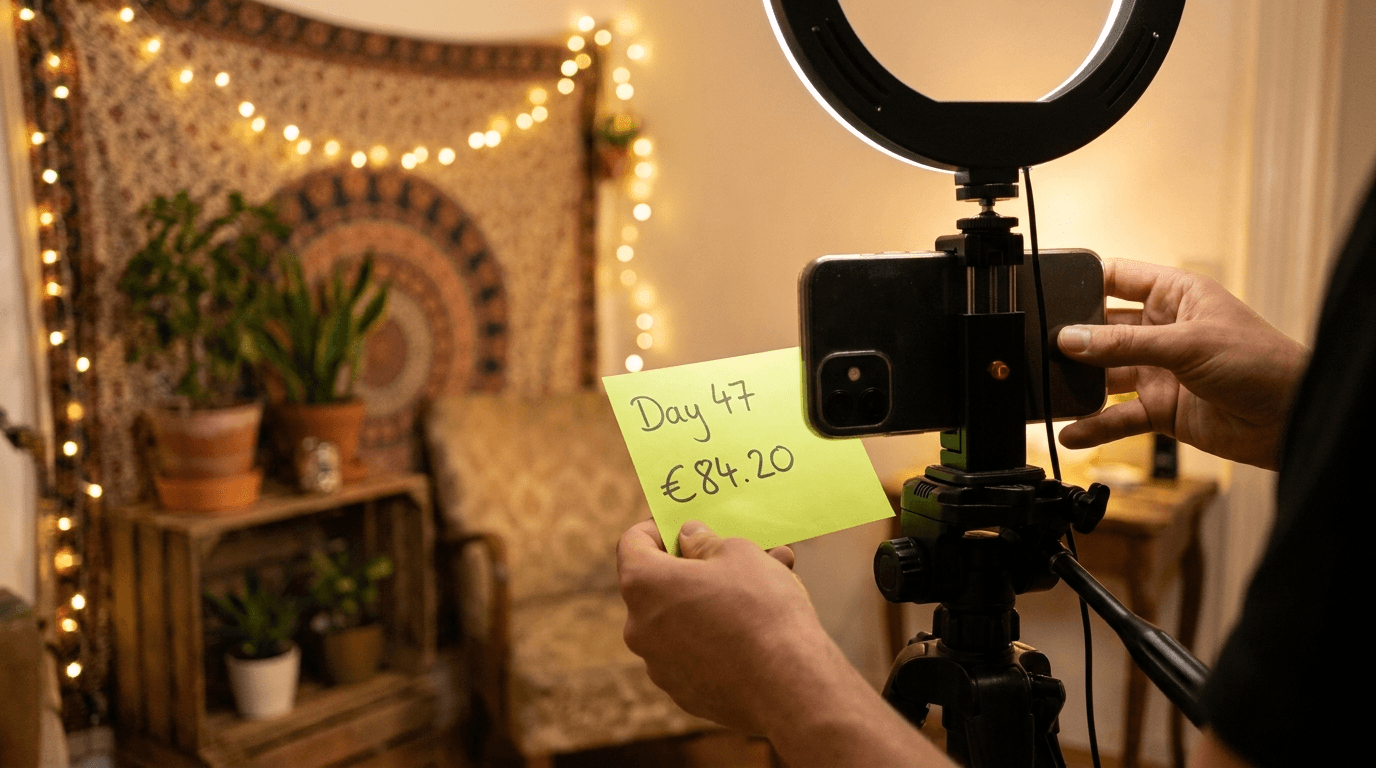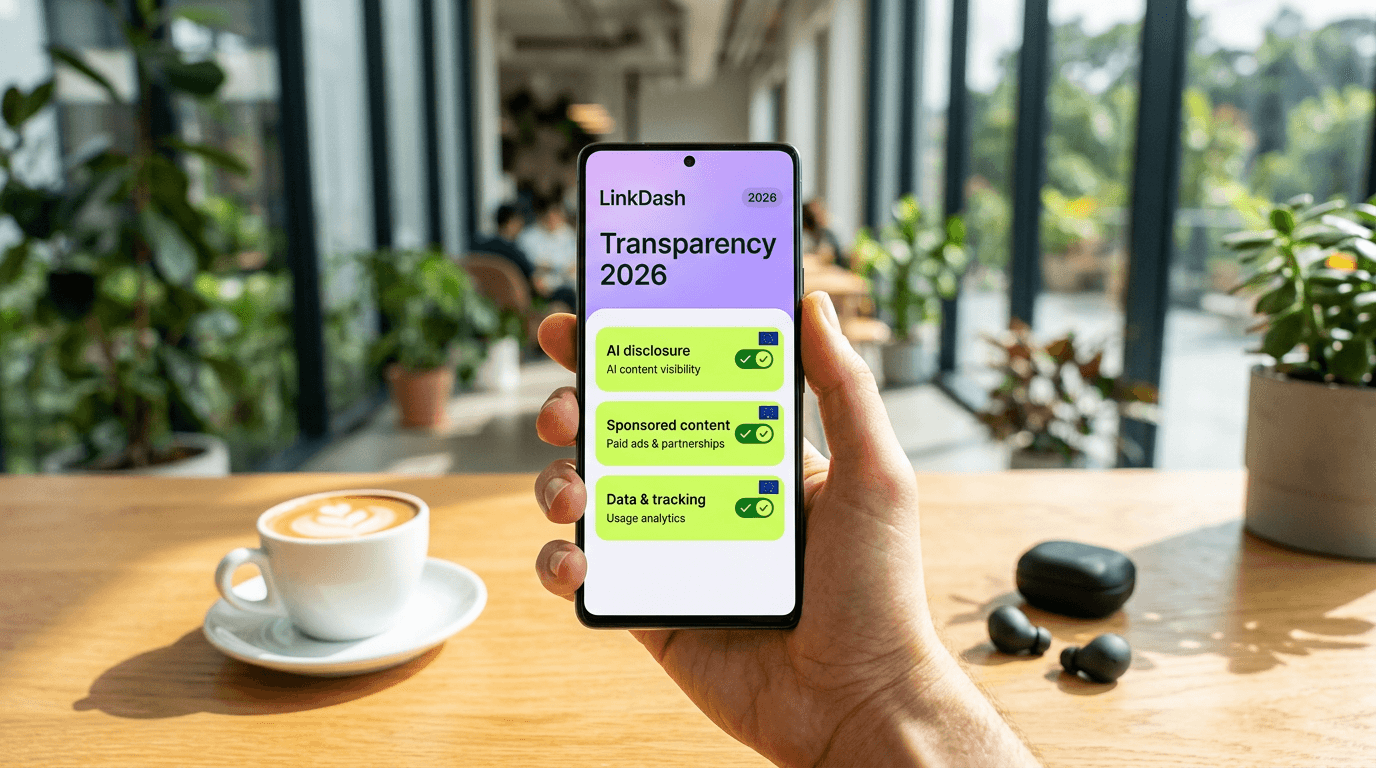
2026 will be the year when transparency becomes the norm for creators — not as a marketing gimmick, but as a business necessity. Brands, platforms, and followers all expect openness about revenue models, sponsorship deals, and affiliate income. Scroll to the 5-step checklist to see immediately how to prepare.
⚡ Transparency will soon define your brand value. Jump to the 5-step checklist, or try LinkDash for free.
Definitions: transparency, creator economy, and consolidation
- Transparency
- In one sentence: Openly communicating your revenue models, sponsorship relationships, and affiliate links to your audience and business partners.
- Creator economy
- In one sentence: The economic ecosystem in which individuals create content and directly monetise via platforms, brands, and their own products.
- Consolidation
- In one sentence: The trend where larger players acquire smaller platforms and tools, causing the market to concentrate among a handful of dominant parties.
- Affiliate disclosure
- In one sentence: A legally required statement that you receive commission when someone purchases through your link.
- Sponsored content
- In one sentence: Content for which a brand pays, regardless of whether the product is shown or only the brand is mentioned.
Why is 2026 the year of transparency for creators?
Short answer: The combination of stricter regulations, more critical audiences, and brand budgets shifting toward trustworthy creators makes openness a competitive advantage rather than just an obligation.
According to Finance Yahoo, transparency becomes the new standard in the creator economy in 2026. This isn't a sudden development — it's the culmination of trends that have been building for years.
The European Digital Services Act (DSA) already requires platforms to clearly label sponsored content. The UK's Advertising Standards Authority (ASA) actively enforces influencer marketing guidelines, while the US Federal Trade Commission (FTC) has significantly increased its endorsement disclosure requirements. And platforms themselves — from Instagram to TikTok — are building mandatory disclosure tools directly into their interfaces.
But regulation alone doesn't explain the shift. The audience has changed. Research consistently shows that followers trust creators who are transparent about their revenue models more, not less. The paradox: openness about commercial interests increases credibility.
What does consolidation mean for the creator economy in 2026?
Short answer: Larger platforms absorb niche tools, making creators more dependent on fewer ecosystems — but also giving them access to more integrated features.
Forbes describes 2026 as "The Era of Consolidation" — a period when the proliferation of creator tools gives way to a smaller number of dominant platforms.
This has direct consequences for transparency. Consolidated platforms can enforce uniform disclosure standards. At the same time, concentration creates risks: if one platform changes its rules, it directly affects millions of creators.
For creators, this means a strategic choice: fully rely on platform features, or invest in your own infrastructure that gives you control over how you communicate transparency.
Comparison: transparency approaches for creators
| Approach | Advantages | Disadvantages | Suitable for |
|---|---|---|---|
| Platform-native disclosure tools | Automatic, complies with platform rules | No control over presentation, platform-dependent | Beginners, hobby creators |
| Manual caption disclosures | Full control over tone of voice | Time-consuming, risk of inconsistency | Micro-influencers with few deals |
| Bio link with transparent affiliate section | Central place for all disclosures, professional appearance | Requires followers to click through | Part-time and full-time creators |
| Dedicated "Partnerships" page on website | Full ownership, SEO benefits | Technical setup required, maintenance | Established creators with own domain |
| Automated disclosure via link-in-bio tool | Consistency, scalability, analytics | Tool dependency, costs | Growing creators with multiple revenue streams |
| Hybrid: platform + own page + bio link | Maximum coverage, redundancy | More complex management | Full-time creators, agencies |
Transparency per creator type: concrete scenarios
Lifestyle influencer with brand deals
You work with 3-5 brands per month and combine paid posts with organic content. Transparency means for you: clear #ad or #sponsored labels, but also a place where followers can see which brands you work with structurally. A bio link page with a "Partnerships" section builds trust and makes it easier for new brands to assess your approach.
Tech reviewer with affiliate links
You primarily earn through affiliate commissions on products you review. The transparency challenge: every link is potentially commercial. Solution: standard affiliate disclosure in every video description and on your bio link page. Consider a "How I earn" section that explains how affiliate links make your independent reviews possible.
Entrepreneur-creator with own products
You sell courses, coaching, or physical products. Here transparency is different: you don't need to disclose that you're promoting your own product, but you do need to disclose any affiliate deals with complementary services. Focus on clear price communication and realistic expectations — "get rich in 30 days" hype damages your credibility in the transparency era.
Micro-influencer building up
You've had your first paid collaborations and want to do it right. Start with the basics: always use platform disclosure tools and add #ad to your caption. Build a "Partnerships" section in your bio link from day one. This shows professionalism to potential brand partners and prevents having to restructure everything later.
Content creator with Patreon/membership
You earn through direct support from your community. Transparency here means: clearly communicating what members get, how you spend their money (content, equipment, team), and being honest about your growth and challenges. Community creators who are open about their finances build deeper relationships.
5-step checklist: implementing transparency
- Audit your current disclosures — Review all your active content. Where are affiliate mentions or sponsor labels missing? Make a list of posts to correct.
- Create a standard disclosure template — Write 2-3 variants you can copy-paste: one for affiliate links, one for paid partnerships, one for gifted products.
- Build a central transparency page — On your bio link or website: who are your regular brand partners, how do you earn, what's your policy on gifted products?
- Automate where possible — Use tools that automatically add affiliate disclosures or force sponsor labels. Consistency is more important than perfection.
- Communicate proactively — Make a post or Story explaining your transparency approach. Followers appreciate it when you explicitly address this rather than hiding it in fine print.
⚡ Struggling to keep all your links and disclosures in one place?
LinkDash gives you a professional bio link page where you can clearly present affiliate links, partnerships, and revenue models — without technical knowledge.
Try LinkDash for free → no credit card · 5-minute setup
Edge cases: when should you disclose or not?
Gifted product you didn't request
A brand sends an unsolicited product and you decide to review it. Do you need to disclose? Yes. Even unsolicited gifts are a material connection to the brand. Use "I received this product for free" or "gifted" — you don't need to pretend you bought it yourself.
Old affiliate links still generating traffic
You have a blog post from 2 years ago with affiliate links but no disclosure. What now? Update the post with a disclosure. Regulators expect active commercial content to be correctly labelled, regardless of publication date.
Discount code without commission
A brand gives you a discount code for your followers but you earn nothing from it. Disclosure needed? Technically yes — the free code is a benefit you receive. Practically: a simple "[Brand] has made this discount available" suffices.
Your own product in a "favourites" video
You mention your own course in a video about "best tools for creators". Disclosure? Not strictly required for your own products, but it's good practice to mention "this is my own product" — it prevents people from thinking you're an affiliate.
Brand you hold shares in
You've invested in a startup and mention their product positively. This is a serious disclosure obligation. Financial interests must be explicitly mentioned, even if you don't receive direct payment.
Disclaimer: these are general guidelines. If in doubt about specific situations, consult the ASA guidelines on social media advertising, the FTC's Disclosures 101, or a legal advisor.
What is the impact of transparency on brand deals in 2026?
Short answer: Brands are shifting budgets toward creators with demonstrable transparency track records, because this reduces their own compliance risks.
The consolidation that Forbes describes has a direct effect on how brands select creators. Large brands increasingly work with dashboards that automatically check whether creators disclose correctly. A history of transparency violations excludes you from premium campaigns.
This isn't future music — it's happening now. Brand safety tools analyse your content for correct labelling. Influencer marketing platforms rank creators partly on compliance scores. A transparent approach is literally visible in the systems brands use.
The regulatory context: DSA, ASA, and FTC
Short answer: The Digital Services Act creates EU-wide minimum standards, while national regulators like the UK's ASA and the US FTC can enforce more strictly in their jurisdictions.
Creators today operate under multiple layers of regulation. The DSA requires platforms to clearly label ads and gives users the right to know why they see certain content. In the UK, the ASA's CAP Code requires that ads are "obviously identifiable" as such. The FTC in the US has been increasingly aggressive about endorsement disclosures, requiring them to be "clear and conspicuous."
In 2026, we expect enforcement to intensify. Regulatory bodies have announced more active monitoring, and international regulators are sharing more information. A violation in one market can have consequences for your reach in others.
Disclaimer and sources
This article was written by Andreas, founder of LinkDash, and is intended as general information about trends in the creator economy. It is not legal or tax advice. Always consult a professional with specific questions.
Primary sources:
- Finance Yahoo: 2026: Transparency Becomes a New Standard in the Creator Economy
- Forbes: The Creator Economy In 2026: The Era Of Consolidation
- ASA: Recognising ads on social media
- FTC: Disclosures 101 for Social Media Influencers
- European Commission: Digital Services Act
Frequently asked questions
What is transparency in the creator economy?
Transparency in the creator economy means openly communicating your revenue models, sponsorship relationships, and affiliate links to your audience and business partners. This includes labelling paid content, disclosing affiliate commissions, and sharing information about how you earn money as a creator.
What is the creator economy consolidation of 2026?
The creator economy consolidation of 2026 is the trend where larger players acquire smaller platforms and tools, causing the market to concentrate among a handful of dominant parties. Forbes describes this as "The Era of Consolidation" — a period when the proliferation of creator tools gives way to a smaller number of dominant platforms.
What is an affiliate disclosure?
An affiliate disclosure is a legally required statement that you receive commission when someone purchases through your link. In the UK this falls under ASA guidelines, in the US under FTC rules, and in the EU under the Digital Services Act — all requiring this disclosure to be clearly visible.
What is sponsored content according to the law?
Sponsored content is content for which a brand pays, regardless of whether the product is shown or only the brand is mentioned. According to advertising regulations, all sponsored content must be clearly labelled as such with terms like #ad, #sponsored, or using platform-native disclosure tools.
Why is 2026 the year of transparency for creators?
2026 becomes the year of transparency through the combination of stricter regulations (DSA, ASA, FTC enforcement), more critical audiences, and brand budgets shifting toward trustworthy creators. Openness is no longer just an obligation but a competitive advantage — brands increasingly select creators based on their transparency track record.
Do I need to disclose gifted products?
Yes, even unsolicited gifts are a material connection to the brand and must be disclosed. Use phrases like "I received this product for free" or "gifted" — you don't need to pretend you purchased the product yourself.
How does transparency affect my brand deals?
Brands are shifting budgets toward creators with demonstrable transparency track records, because this reduces their own compliance risks. Brand safety tools analyse your content for correct labelling, and influencer marketing platforms rank creators partly on compliance scores. A transparent approach improves your position for premium campaigns.
What is the Digital Services Act (DSA) for creators?
The Digital Services Act is EU legislation that requires platforms to clearly label ads and gives users the right to know why they see certain content. For creators, this means platforms must offer mandatory disclosure tools and correctly labelling commercial content becomes even more important.
How do I create a transparency page for my bio link?
An effective transparency page for your bio link contains: an overview of your regular brand partners, an explanation of how you earn (affiliate links, sponsorship deals, own products), your policy on gifted products, and possibly a link to your full collaboration terms.
Which creator types benefit most from transparency?
All creator types benefit from transparency, but the approach differs. Lifestyle influencers focus on brand deal disclosures, tech reviewers on affiliate mentions, entrepreneur-creators on honest product communication, and community creators on openness about their financial situation and growth.
Can I get fined for missing disclosures?
Yes, regulators like the ASA, FTC, and EU national authorities can enforce violations of advertising disclosure rules. Penalties range from warnings to significant fines. Additionally, platforms can remove your content or restrict your account for repeated violations of their disclosure rules.
How long do I need to keep old content with affiliate links up to date?
As long as the content is active and generating traffic, the disclosure must be present. Regulators expect active commercial content to be correctly labelled, regardless of publication date. For evergreen content, this practically means: continuously monitor and update where necessary.
Conclusion: transparency as competitive advantage
The predictions from Finance Yahoo and Forbes about 2026 are clear: transparency shifts from nice-to-have to must-have. Creators who invest now in solid transparency infrastructure — from disclosure templates to central pages — position themselves for success in an increasingly critical market.
This isn't about following rules to avoid fines. It's a strategic choice to build trust at a time when that trust is scarce and valuable.
Related articles: