
New York synthetic performer disclosure law effective June 9, 2026: what creators with US audiences need to know
From June 9, 2026, New York requires disclosure for AI-generated digital replicas in advertisements. What does this mean for creators with American audiences? A practical guide with checklist.
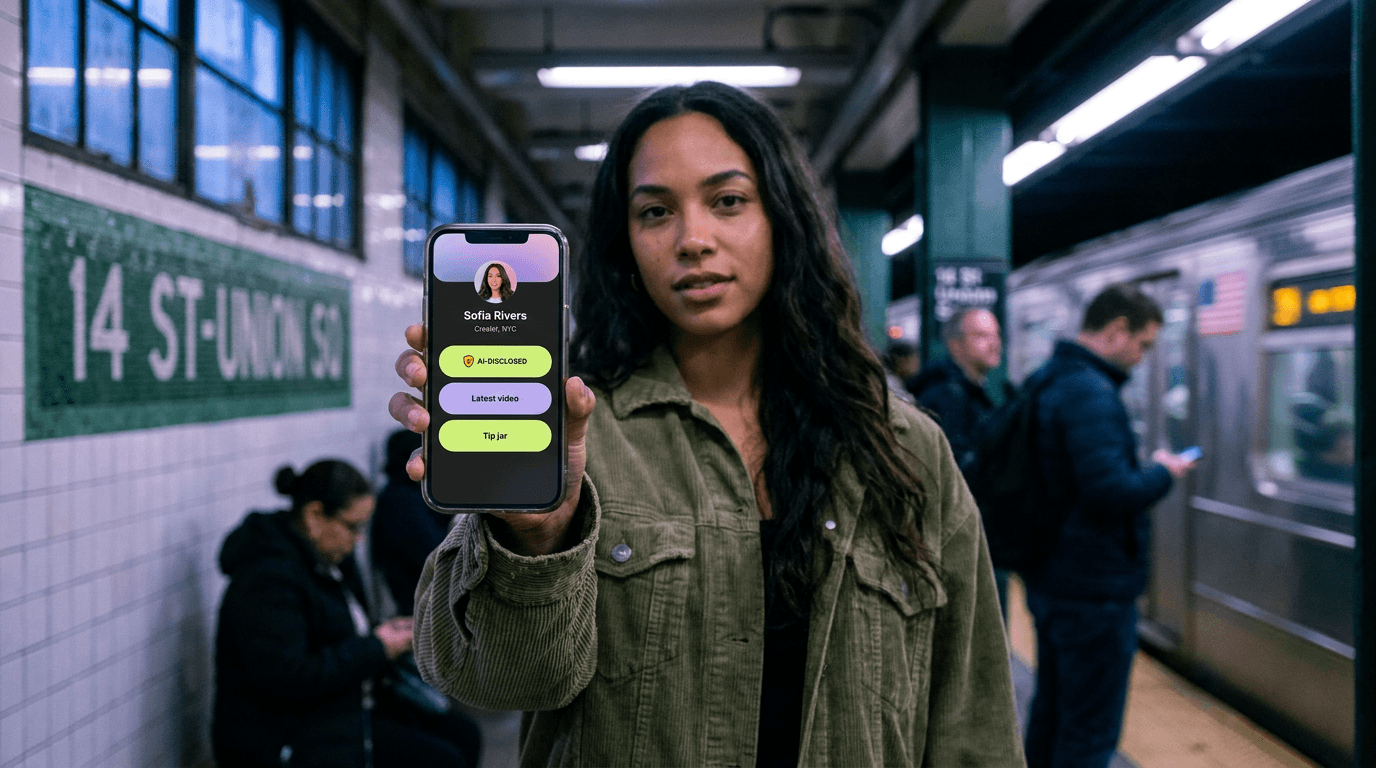
From June 9, 2026, New York State requires advertisers to clearly disclose when they use AI-generated 'digital replicas' of performers in advertisements — and this affects creators worldwide who reach US audiences through their bio link page. In this article, I explain exactly what the law entails, when you need to comply, and how to adapt your workflow now. Jump to the 5-step checklist if you want to get started immediately.
⚡ AI disclosure becomes mandatory in NY. Jump to the 5-step checklist, or try LinkDash free.
Key definitions: AI disclosure, digital replica, and synthetic performer
- AI disclosure
- In one sentence: A mandatory statement indicating that content was wholly or partially generated using artificial intelligence.
- Digital replica
- In one sentence: An AI-generated reproduction of someone's voice, image, or likeness that is indistinguishable from the original.
- Synthetic performer
- In one sentence: A fully AI-created 'person' not based on any existing individual, but who appears human.
- Deployer (EU AI Act)
- In one sentence: The party that deploys an AI system under their own responsibility — often the creator or brand, not the tool developer.
- FTC disclosure guidelines
- In one sentence: The U.S. Federal Trade Commission guidelines requiring transparency in advertisements and endorsements.
What does the New York law actually require?
Short answer: The law requires advertisers to place a 'clear and conspicuous' disclosure when using AI-generated digital replicas of performers in advertisements shown in New York.
The New York law, which takes effect on June 9, 2026, specifically targets the use of digital replicas in commercial contexts. These are AI-generated reproductions of existing people — think of an influencer whose voice or face is replicated without them physically being present during recording.
The core requirements:
- The disclosure must be 'clear and conspicuous' — no fine print at the bottom of a page
- It must be immediately obvious to the average consumer that AI was used
- The requirement applies to advertisements shown to New York residents
What the law does not do: it doesn't prohibit the use of AI-generated content. It only requires transparency. That sounds straightforward, but the practical implementation raises questions — especially for creators outside the US.
Does my content fall under this law if I'm outside the US?
Short answer: Probably yes, if you share advertisements or sponsored content with a significant American audience — even from London, Toronto, or Sydney.
The law focuses on where the advertisement is shown, not where the creator lives. This means:
- If you create Instagram Reels, TikToks, or YouTube videos that are viewed in New York, and that content contains AI-generated elements of real people, you potentially fall under the law
- Bio link pages with affiliate links to US products occupy a grey area — they're not 'advertisements' in the traditional sense, but could be considered commercial content
- Sponsored posts where you promote a brand almost certainly fall under the definition of 'advertisement'
The extraterritorial reach is comparable to the GDPR: it's about who you reach, not where your office is located. According to analysis from Pillsbury Law, this jurisdictional approach mirrors how other states like California have approached digital advertising regulation.
How does this relate to the EU AI Act?
Short answer: The EU AI Act (Article 50) also requires disclosure for AI-generated content, but with different definitions and a broader scope.
Article 50 of the EU AI Act, which is being phased in, establishes transparency obligations for 'deployers' of AI systems. For creators, this means:
| Aspect | New York law | EU AI Act (Art. 50) |
|---|---|---|
| Effective date | June 9, 2026 | Phased in from 2024-2026 |
| Scope | Digital replicas in advertisements | All AI-generated content that could pass as 'real' |
| Who must disclose? | Advertiser | Deployer (often the creator) |
| Content type | Commercial advertisements | Deep fakes, synthetic media, AI-generated text in public contexts |
| Enforcement | New York Attorney General | National authorities in EU member states |
| Penalties | Not yet specified | Up to 3% of global revenue |
For creators with international audiences, this means dual compliance: you need to meet both regulatory frameworks. The good news: if you follow the stricter standard (likely the EU AI Act), you automatically satisfy most other requirements.
The UK is taking a different approach. Rather than comprehensive AI legislation, the UK government has opted for sector-specific guidance, though the pro-innovation approach may evolve as the technology matures.
Practical scenarios by creator type
Scenario 1: Fashion influencer with affiliate links
You use AI to generate product mockups or 'paste' your own face onto outfits you haven't physically worn. If this reaches US audiences via your bio link page with affiliate links, you need to add disclosure. Practically: add a visible tag to the image or a text line directly above or below the content.
Scenario 2: Podcast creator with AI-generated intros
You use an AI tool to generate or 'enhance' your intro voice. If this is a replica of your own voice (or someone else's), it falls under the law once you have US listeners. Solution: mention in your show notes or description that AI was used for audio elements.
Scenario 3: UGC creator for US brands
You create user-generated content for American brands that use AI tools to modify your face or voice. Here the primary responsibility lies with the brand (the advertiser), but you could be held liable contractually. Ensure your contracts contain clear agreements about who handles disclosure.
Scenario 4: Educator with AI-generated visuals
You use DALL-E or Midjourney for course thumbnails or illustrations. This probably doesn't fall under the NY law (no digital replica of a person), but does fall under the broader EU AI Act if the images could pass as 'real'. Best practice: add disclosure anyway — it costs nothing and builds trust.
Scenario 5: Musician with AI-assisted production
You use AI for mastering, pitch correction, or even generating backing vocals. As long as this concerns your own voice and not a replica of another artist, you probably don't fall under the NY law. But check your record label contracts — some already contain AI disclosure clauses.
5-step checklist for AI disclosure compliance
- Audit your content — Create a list of everywhere you use AI: images, audio, video, text. Specifically note where digital replicas of people appear.
- Determine your geographic reach — Check your analytics. Do you have significant US traffic? >5% from New York? Then you need to be compliant.
- Choose your disclosure format — Text overlay on visuals, description in bio, or a dedicated 'AI usage' section on your link page. Make it visible, not hidden.
- Update your bio link page — Add a general AI disclosure statement. In LinkDash you can add this as a fixed text block that appears on all your pages.
- Document your process — Keep track of which content contains AI and what disclosure you've applied. This protects you in case of any claims.
⚡ Want to make your bio link page compliant without the hassle?
LinkDash supports custom text blocks and disclaimers that you can display on all your pages — ideal for AI disclosures your audience sees immediately.
Try LinkDash free → no credit card · 5 minute setup
Edge cases and grey areas
Edge case 1: AI-enhanced photos vs. digital replicas
You use Lightroom's AI denoise or Photoshop's generative fill to enhance a photo. This technically isn't a 'digital replica' — your original face was already there. The law appears to target generated replicas, not enhanced originals. However, there's no case law yet. Safe choice: disclose if you're uncertain.
Edge case 2: AI-generated text in captions
ChatGPT for your Instagram captions doesn't fall under the NY law (no 'performer'). The EU AI Act is stricter and may require disclosure for AI text in commercial contexts. Practically: most platforms don't (yet) require this, but that could change quickly.
Edge case 3: Voice cloning of your own voice
You train an AI on your own voice and use it for content. Legally complex: you're both the 'performer' and the 'deployer'. The law appears aimed at protecting third parties, but the letter of the law could also cover self-voice replicas. Wait for guidance or add disclosure preventively.
Edge case 4: AI avatars that don't resemble you
You use a completely fictional AI avatar (synthetic performer). The NY law focuses on 'digital replicas' of existing people, so fully fictional avatars probably fall outside its scope. The EU AI Act may be stricter if the avatar passes as a 'real person'.
Edge case 5: Reposting AI content from others
You share an AI-generated video from someone else on your channel. Are you now the 'advertiser'? Probably not if you don't gain commercial benefit, but yes if you share it as sponsored content. Responsibility is layered and hasn't crystallised yet.
Note: this article provides general information and is not legal advice. Consult an attorney for your specific situation, especially for commercial activities with US audiences.
Disclaimer and sources
This article is based on publicly available information about the New York synthetic performer disclosure law and the EU AI Act. The exact enforcement and interpretation of these laws will evolve as case law develops.
Sources consulted:
- Dynamis LLP — AI Disclosure in 2026: Recent Developments and Practical Steps for Brands and Influencers
- EU AI Act — Article 50: Transparency Obligations for Providers and Deployers of Certain AI Systems
- FTC Endorsement Guides
- New York State Senate — Legislative Records
- European Commission — Regulatory Framework for AI
Frequently asked questions
What exactly is AI disclosure?
AI disclosure is a mandatory statement indicating that content was wholly or partially generated using artificial intelligence. The goal is transparency toward the consumer about the origin of what they see or hear.
What is a digital replica according to the law?
A digital replica is an AI-generated reproduction of someone's voice, image, or likeness that is indistinguishable from the original. The New York law specifically targets the use of such replicas in advertisements.
What's the difference between a digital replica and a synthetic performer?
A digital replica is based on an existing person, while a synthetic performer is a fully AI-created 'person' not based on any specific individual. The NY law primarily focuses on digital replicas.
What does 'deployer' mean in the EU AI Act?
A deployer is the party that deploys an AI system under their own responsibility — often the creator or brand using the AI tools, not the developer of the tool itself.
When does the New York AI disclosure law take effect?
The New York synthetic performer disclosure law takes effect on June 9, 2026. Creators and brands have until that date to get their compliance processes in order.
Does the law apply to creators without a US business presence?
Probably yes, if you share advertisements or sponsored content with a significant American audience — even from London, Toronto, or Sydney. The law focuses on where the advertisement is shown, not where the creator lives.
How exactly should I word the disclosure?
The law requires the disclosure to be 'clear and conspicuous'. No exact wording is prescribed, but it must be immediately obvious to the average consumer that AI was used. Examples: "This image contains AI-generated elements" or "AI-generated content".
Does AI-enhanced photography also fall under the law?
This is a grey area. AI tools for photo enhancement (denoise, colour correction) are technically not 'digital replicas' because your original face was already there. The law appears to target generated replicas, not enhanced originals, but there's no case law yet.
What are the penalties for non-compliance?
The exact penalty structure for the NY law hasn't been specified yet. The EU AI Act can impose fines up to 3% of global revenue. For individual creators, reputational damage is often a greater risk than financial penalties.
Do I need to add disclosure to old content?
The law applies from June 9, 2026 to advertisements shown from that date. If old content is still actively promoted or running as an advertisement, you probably need to add disclosure. Archived content that's no longer actively circulating probably falls outside scope.
How does LinkDash relate to AI disclosure compliance?
LinkDash supports custom text blocks and disclaimers that you can display on all your link pages. You can add an AI disclosure statement that automatically appears on all your pages, so visitors are immediately informed.
Where can I find the official legal text?
The New York law can be found via the New York State Senate website. The EU AI Act, including Article 50 on transparency obligations, is available at artificialintelligenceact.eu and official EU legislation databases.
Next steps
AI disclosure legislation is evolving. The best strategy now: start with transparency before it becomes mandatory. Your audience appreciates honesty, and early compliance prevents stress when the law is actually enforced.
Want to learn more about how to optimally use your bio link page for trust and transparency? Also read: What is a link-in-bio page and why do you need one?
Written by Andreas, Founder of LinkDash.
Emma
Growth Manager at LinkDash
Emma is Growth Manager at LinkDash and writes about conversion, link-in-bio strategy and the European creator economy. She focuses on data-driven growth tactics for creators and small businesses.
Ready to get started?
Create your own link-in-bio page for free with iDEAL, Wero and 100+ templates.
Start free