
Bio-link for antique dealers: selling one-of-a-kind pieces via social media
How antique dealers and vintage sellers turn Instagram followers into buyers using a smart bio-link, Mini Shop and instant checkout — without auction platforms or high commissions.
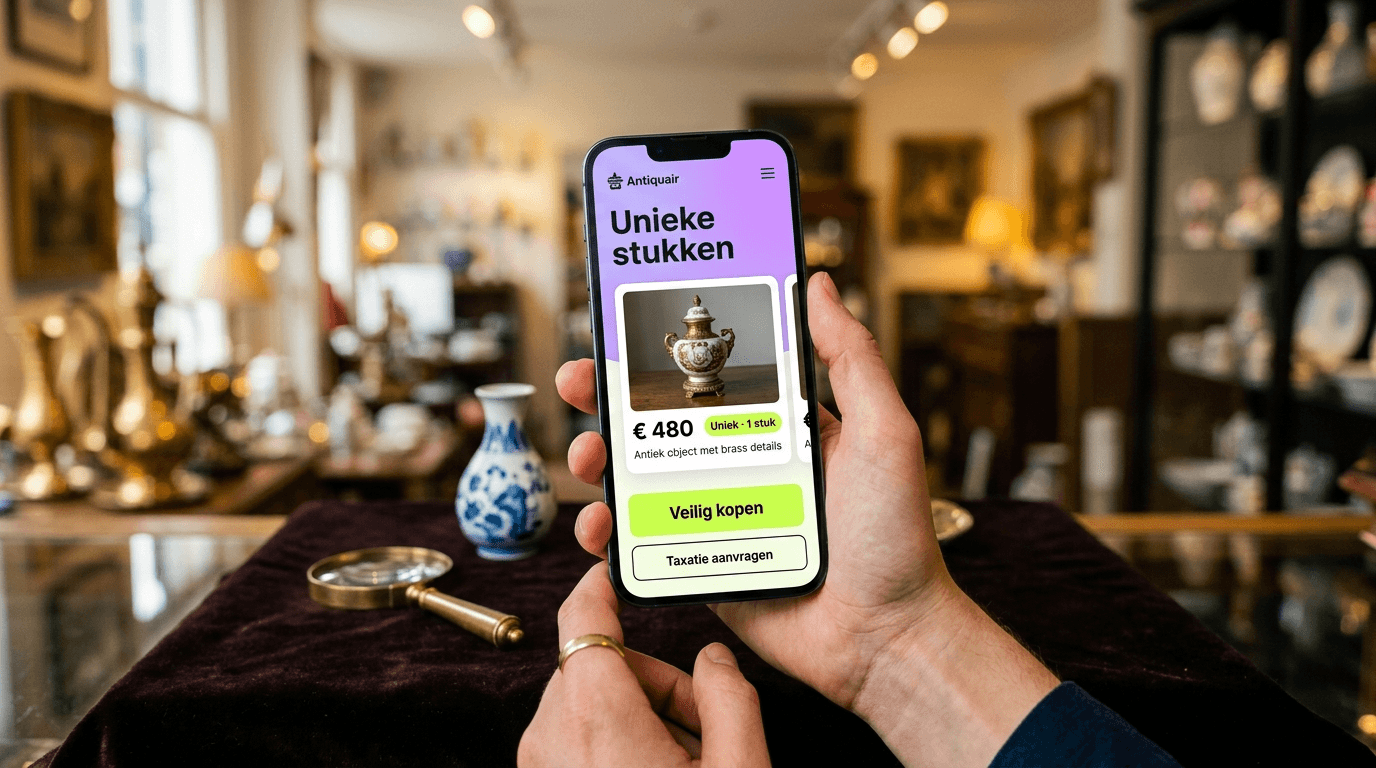
Antique dealers and vintage sellers face a unique sales challenge: every piece is one-of-a-kind, inventory rotates quickly, and buyers decide in seconds. A bio-link with Mini Shop, instant payment options and real-time updates converts Instagram followers into buyers — without the 15-25% commission charged by auction platforms. Scroll to the 5-step checklist for the complete setup.
⚡ From display cabinet to sale in 24 hours. Jump to the 5-step checklist, or try LinkDash free.
Definitions: bio-link, Mini Shop and one-of-a-kind inventory
- Bio-link
- In one sentence: A mobile landing page behind the link in your Instagram bio that bundles multiple destinations — product pages, contact, payment links — without followers leaving the app for a full webshop.
- Mini Shop
- In one sentence: A compact product catalogue within your bio-link where visitors can browse items, select and checkout directly via Stripe, PayPal or other payment methods.
- One-of-a-kind inventory management
- In one sentence: Stock management for unique items where each product automatically switches to "sold out" after one transaction — crucial for antiques where no second piece exists.
- Instant payment methods
- In one sentence: Direct payment options like Apple Pay, Google Pay or bank transfers that confirm within seconds, ideal for impulse purchases from vintage enthusiasts worried the piece won't be there tomorrow.
- Provenance
- In one sentence: The documented history of an antique object — previous owners, purchase documents, restorations — that proves authenticity and increases value.
Why do antique dealers and vintage sellers need a bio-link?
Short answer: Because Instagram offers no native checkout for one-off items, auction sites charge 15-25% commission, and a full webshop is too slow for inventory that changes daily.
The classic sales channels for antiques — eBay, Etsy, 1stDibs, Chairish, auction houses, antique fairs — work, but they cost time and margin. eBay charges up to 13.25% in final value fees. 1stDibs takes 20% or more. Physical markets mean booth fees, travel time and weather dependency. A dedicated webshop with Shopify or WooCommerce requires maintenance and is overkill when you have five to fifteen new pieces weekly.
Instagram solves the reach problem: vintage enthusiasts scroll daily through hashtags like #antiquesforsale, #vintagefinds and #midcenturymodern. But the platform has a bottleneck — you can only place one clickable link. Without a smart bio-link, that single link leads to a homepage where visitors get lost, or to a specific product that's sold tomorrow.
A bio-link with Mini Shop functionality solves both problems:
- Real-time product overview you can update in minutes
- Direct checkout without redirects to external auction sites
- Automatic "sold" status for unique items
- QR code for physical fairs and markets
- No commission per transaction — just a flat monthly fee
How do you set up a Mini Shop for unique items with limited stock?
Short answer: Set inventory to "1", activate automatic sold-out notification, and group items by category or period so collectors quickly find what they're looking for.
Step 1: Categories that collectors understand
Vintage dealers often make the mistake of categorising based on what makes sense to them: "New finds", "Small items", "Large furniture". Collectors think differently. They search by period (Art Deco, Mid-Century, Victorian), material (brass, porcelain, oak) or function (lighting, tableware, seating).
Practical category structure for an average vintage dealer:
- Just in — for urgency, maximum 10 items
- Lighting — lamps, chandeliers, wall sconces
- Furniture — chairs, tables, cabinets
- Decorative — mirrors, clocks, sculptures
- Porcelain & glass — tableware, vases, crystal
- Sold archive — optional, shows track record
Step 2: Stock set to "1" for automatic scarcity
With platforms like LinkDash, you set stock per product. For antiques, that's always "1". Once someone checks out, the item automatically switches to "sold out" — no manual updates, no double sales, no disappointed buyers.
This also creates psychological urgency. Visitors know: this piece exists only once. Hesitating means losing.
Step 3: Product descriptions that sell and protect
Antiques sell on story and condition. A good product description contains:
- Period and style: "Art Deco desk lamp, circa 1935"
- Dimensions: Height, width, depth in inches or centimetres
- Material: "Brass base, opaline glass shade"
- Condition: Honest and specific — "Light patina on brass, no chips in glass, original wiring replaced"
- Provenance: If known, this increases value and trust
- Shipping: "Insured shipping in custom packaging, $15 within US / £12 within UK"
The condition description is crucial. Antique buyers accept patina and wear — that's part of vintage. But they don't want surprises. Describe wear honestly, and you prevent returns and negative reviews.
Product photography for antiques: lighting, details and showing authenticity
Short answer: Photograph in indirect daylight, take at least five photos per item (full view, detail, underside, damage, scale), and always show a ruler or recognisable object for size reference.
Lighting: daylight is your friend
Professional antique photography uses diffused daylight — no direct sun, no harsh lamps. Photograph by a north-facing window or on an overcast day. Direct sun creates hard shadows and hides details. Artificial light creates colour casts that make porcelain yellow and wood orange.
Practical setup:
- Place a white or neutral background (linen cloth, white card)
- Position the item 3-6 feet from a large window
- Use a reflector (white card) on the shadow side to reduce contrast
- Photograph with smartphone in portrait mode for natural background blur
The five photos every antique listing needs
- Full shot: The complete item, neatly positioned
- Detail photo: Close-up of the most beautiful detail — engraving, wood grain, glaze
- Underside/back: Where maker's marks, stamps or signatures are located
- Damage/wear: Honest photo of chips, scratches or repairs
- Scale photo: Item next to ruler, coin or hand for size reference
The damage photo feels counterintuitive, but it builds trust. Buyers know they're buying what they see. No surprises, no returns, no disputes.
Showing authenticity without certificates
Not every antique item has documented provenance. But you can visually support authenticity:
- Photograph maker's marks, stamps and signatures in close-up
- Show construction details: hand-cut joinery, pontil marks in glass
- Document patina and wear patterns consistent with age
- Place items in context: an Art Deco lamp next to a magazine from the same period
Fast checkout via instant payments for impulse purchases
Short answer: Vintage enthusiasts decide in seconds — if checkout takes more than two clicks, they drop off. Apple Pay, Google Pay and Stripe confirm within 10 seconds, perfect for "now or never" purchases.
Why speed is crucial for vintage
Antiques and vintage trigger impulse purchases. A collector sees a Murano vase in their feed, recognises the style, knows it could be gone tomorrow. The decision takes ten seconds. The checkout must be equally fast.
Every extra step — creating an account, entering address three times, waiting for confirmation email — is a moment to abandon. Apple Pay solves this: two taps, fingerprint, done. PayPal Express offers similar convenience for US and UK buyers.
Checkout optimisation in your Mini Shop
- Show shipping costs upfront: No surprises at checkout
- Allow guest checkout: No mandatory account registration
- Payment methods prominent: PayPal, Apple Pay logos directly visible
- Mobile-first design: 80%+ of Instagram traffic is mobile
Pricing strategies for antiques via social
Unlike new products, antique pricing isn't a race to the bottom. Buyers expect fair prices, not the lowest. Practical tips:
- Round prices to psychological thresholds ($95 feels smaller than $100)
- Offer free shipping above a threshold (e.g. $150+)
- Show original auction value as reference, if available
- Use "Price on request" only for high-end pieces above $500
Instagram Story strategy: teasing new finds and directing to bio-link
Short answer: Post new finds first in Stories with "Link in bio" sticker, create urgency with "Just in — only 1 available", and archive in Highlights by category.
The 24-hour Story cycle for vintage dealers
Stories disappear after 24 hours — perfect for the urgency antiques need. An effective cycle:
Morning (9:00-10:00): Show new finds unpacked or in raw state. "Just in from estate sale — online later today." This builds anticipation.
Afternoon (1:00-2:00): Professional product photos with prices. "Now live in the shop — link in bio." Direct call-to-action.
Evening (7:00-8:00): Behind-the-scenes content. Restoration process, market visit, packaging a sold item. This builds personal connection.
Story elements that convert
- Link sticker: Direct to product page, not to general bio-link
- Poll sticker: "Which colour should I pick up?" for engagement
- Countdown sticker: "Live in 2 hours" for product launches
- "Tap for price" text: Creates interaction and algorithm boost
Highlights as permanent catalogue
Organise Highlights as mini-categories:
- 🆕 Just in
- 💡 Lighting
- 🪑 Furniture
- 📦 Shipping (process, packaging, unboxing reviews)
- ✅ Sold (social proof)
QR code at fairs and markets for on-the-spot browsing and reserving
Short answer: Print a QR code linking to your bio-link on booth cards and price tags — visitors scan, browse your full collection, and reserve items that don't fit on the stall.
Why QR works at antique fairs
Antique fairs have a logistics problem: you can't bring your entire collection. Large furniture stays home. Fragile items are too risky. But visitors at an antique fair are warm leads — they've come specifically to buy.
A QR code solves this:
- Show your full collection, not just what fits on the booth
- Let visitors reserve items they'll pick up later
- Collect contact details for future sales
- Avoid the "I'll think about it" moment — they can still order at home
Practical QR implementation
- Booth card: A4 size with QR, shop name and "Scan for full collection"
- Price tags: Small QR stickers on each item linking to that specific product page
- Business cards: QR code on the back for networking
- Receipt/invoice: QR code for future purchases
Reservation function for physical sales
Not everyone buys immediately. A "Reserve for 24 hours" option in your Mini Shop gives hesitant buyers thinking time without you selling the piece to someone else. Practical conditions:
- Reservation expires automatically after 24-48 hours
- Optional deposit (10-20%) for more expensive items
- Clear communication: "Reserved until [date/time]"
Communicating shipping and return policy for fragile and unique items
Short answer: Be explicit about packaging, insurance and return conditions — place this prominently on your bio-link, not hidden in small print.
Shipping policy that builds trust
Antique buyers have legitimate concerns about shipping. Porcelain breaks. Wood scratches. Glass cracks. Your shipping policy must address these concerns before they block purchasing decisions.
Elements of a strong shipping policy:
- Packaging method: "Double-wrapped with bubble wrap and custom-cut cardboard"
- Insurance: "All shipments insured up to purchase value"
- Carrier: "Shipping via UPS/FedEx with tracking" (US) or "Royal Mail Special Delivery" (UK)
- Delivery time: "2-3 business days domestic, 5-7 days international"
- Collection: "Free collection in [city] by appointment"
Return policy for unique items
In the US, return policies vary by state and are largely at seller discretion for antiques. In the UK and EU, consumers typically have 14 days to return. But with antiques there are nuances:
- Description is binding: If you document "small chip on underside" with photo, that's not grounds for return
- Return shipping: Buyer pays return costs unless item doesn't match description
- Packaging requirement: "Return only in original packaging" protects against damage
- Inspection time: "Inspect within 24 hours of receipt and document any damage"
Where do you communicate this?
Place shipping and return policy in three places:
- Bio-link: Separate section or link to policy page
- Product page: Summary under each listing
- Checkout: Checkbox "I agree to shipping and return terms"
⚡ Manually updating products across three platforms every day?
LinkDash Mini Shop automatically syncs inventory, marks sold items as out of stock, and accepts payments without transaction fees eating your margins.
Try LinkDash free → no credit card · 5 minute setup
5-step checklist: from display cabinet to Instagram sales
- Set up bio-link: Choose a platform with Mini Shop, payment integration and stock-at-1 functionality. Set up categories that collectors recognise.
- Standardise product photography: Create a fixed setup with daylight. Always take five photos: full view, detail, underside, damage, scale. Consistency builds brand recognition.
- Publish shipping and return policy: Place clear terms on your bio-link. Mention packaging method, insurance and return process.
- Start Instagram Story routine: Post new finds in the morning, live listings in the afternoon, behind-the-scenes in the evening. Archive in Highlights by category.
- Print QR code for physical sales: Place on booth card, price tags and business cards. Link to bio-link or specific product pages.
Scenario: antique dealer specialising in furniture ($500-$5,000)
Profile
Dealer with 50-100 pieces in stock, primarily cabinets, tables and chairs from the 18th-19th century. Currently sells via own premises and twice yearly at major antique fairs.
Bio-link strategy
- Categories: Cabinets, Tables, Seating, Accessories, Just in
- Price display: Full price including any applicable taxes
- Checkout: 20% deposit online, remainder on delivery/collection
- Shipping: Not via regular post — partner with furniture courier, mention in product listing
Instagram approach
Feed for "hero shots" — one piece of furniture in styled setting per post. Stories for behind-the-scenes: restoration process, unloading new acquisitions, customer deliveries. Reels for before-and-after transformations of restored pieces.
Scenario: vintage dealer in smaller decorative items ($25-$250)
Profile
Dealer specialising in mid-century lighting, pottery and glassware. High turnover — 20-30 new items per week. Currently sells via Instagram DMs and occasionally eBay.
Bio-link strategy
- Categories: Lamps, Vases, Tableware, Wall Art, Under $50
- Stock: Always set to "1", automatic sold-out status
- Checkout: Full payment via Stripe/PayPal, no deposits
- Shipping: Flat rate $8.95 domestic, free above $100
Instagram approach
Daily Stories with new finds. "Just in" posts with multiple items in carousel. Link stickers direct to product pages. DMs only for questions, not price negotiations — price is in the listing.
Scenario: specialist collector-dealer (niche collectibles)
Profile
Dealer specialising in specific niche — for example Art Deco bronzes, Staffordshire pottery, or militaria. International customer base, higher average order value ($200-$2,000).
Bio-link strategy
- Categories: Organised by sub-niche within specialism
- Language: English product descriptions for international buyers
- Authenticity: Provenance documentation prominent in every listing
- Shipping: International rates, insurance options
Instagram approach
Educational content about the niche: "How to recognise genuine Art Deco vs reproduction". Builds authority, attracts collectors, differentiates from generic vintage accounts.
Scenario: market trader and brocanteur
Profile
Dealer who primarily sells at weekly markets and flea markets. Has no fixed premises. Stock rotates completely every month.
Bio-link strategy
- Events calendar: Prominent section with upcoming markets and locations
- QR focus: Bio-link primarily functions as digital catalogue for market visitors
- Reservations: "Reserve and collect at the market" — no shipping logistics
- Pre-sales: Show new finds before the market, let followers reserve
Instagram approach
Stories live from the market. Location tags for local reach. "Come visit!" posts with address and times. Followers become physical visitors.
Edge cases and common dilemmas
Item damaged during shipping — who's responsible?
Legally, as seller you're responsible until the package reaches the buyer. Practically: insure all shipments, document the packaging process with photos, and work with carriers who take claims seriously. In case of damage: refund or replace, and file a claim with the carrier.
Buyer claims item isn't authentic after purchase
Document authenticity before sale: maker's marks, construction details, provenance if known. If you have expertise, mention it: "25 years' experience in Art Deco bronzes". For legitimate doubt: offer return. For unfounded claims: refer to your documentation.
Multiple buyers want the same unique item
First come, first served — whoever checks out first gets the item. Make this explicit in your terms. Reservations without payment are not a guarantee. Optionally: waiting list for interested parties for similar future items.
International shipping of antiques with export restrictions
Some antique items (ivory, certain artworks, cultural heritage) have export restrictions under CITES or national heritage laws. State in your bio-link: "International shipping on request — some items may have restrictions." Check per item before accepting international sales. In the US, the Lacey Act and various state laws add complexity for certain categories.
Buyer wants to negotiate price via DM
Standard response: "The price in the listing is my best price. I don't adjust prices via DM." This prevents endless negotiations and keeps your workflow efficient. Optionally: offer bundle discount for multiple items.
Disclaimer: the information in this article is intended for informational purposes and does not replace legal or tax advice. Regulations around antique sales, export and consumer rights vary by country and change regularly. Consult a specialist for specific situations.
Sources and further reading
- Federal Trade Commission (FTC) — Consumer Protection Guidelines for Online Sales
- US Fish & Wildlife Service — CITES and Antique Ivory Regulations
- UK Government — Cultural Property Advice for Dealers
- HMRC — Margin Scheme for Second-hand Goods
- UPS / FedEx — Insurance and Claims for Valuable Shipments
Frequently asked questions
What is a bio-link for antique dealers?
A bio-link for antique dealers is a mobile landing page behind the link in your Instagram bio that bundles multiple destinations — product pages, contact, payment links — without followers leaving the app for a full webshop. It's especially useful for dealers with rapidly changing inventory.
What is one-of-a-kind inventory management?
One-of-a-kind inventory management is stock management for unique items where each product automatically switches to "sold out" after one transaction — crucial for antiques where no second piece exists. This prevents double sales and disappointed buyers.
What's the difference between instant payment options for antique sales?
Apple Pay and Google Pay are mobile-first instant payment methods that confirm within seconds. PayPal Express offers similar convenience. All are ideal for impulse purchases from vintage enthusiasts worried the piece won't be there tomorrow.
What is provenance in antiques?
Provenance is the documented history of an antique object — previous owners, purchase documents, restorations — that proves authenticity and increases value. The more complete the provenance, the more trust from buyers.
How many photos does an antique item need for online sales?
An antique item needs at least five photos: full shot, detail photo of the most beautiful element, underside or back with maker's marks, honest photo of damage or wear, and a scale photo with ruler or recognisable object for size reference.
What lighting works best for antique photography?
Diffused daylight works best — photograph by a north-facing window or on an overcast day. Direct sun creates hard shadows and hides details. Artificial light creates colour casts that make porcelain yellow and wood orange.
How do I prevent double sales of unique items?
Set stock per product to "1" in your Mini Shop. Once someone checks out, the item automatically switches to "sold out" — no manual updates needed, no double sales, no disappointed buyers.
Do I have to accept returns on antiques?
Return policies vary by jurisdiction. In the UK/EU, consumers typically have 14 days. In the US, it's largely at seller discretion. But if you honestly document damage or wear with photos, that's not grounds for return. Buyer pays return costs unless item doesn't match description.
Does a QR code actually work at antique fairs?
Yes — fair visitors are warm leads who've come specifically to buy. A QR code to your bio-link lets them browse your full collection, reserve items that don't fit on the booth, and still order at home after the fair.
How do I determine shipping costs for fragile antique items?
Calculate actual costs including packaging materials, insurance and any surcharges for size or weight. Round up with small margin for unforeseen costs. Show shipping costs upfront in your product listing, not just at checkout.
Can I ship antiques internationally via my bio-link shop?
Yes, but check per item for export restrictions under CITES or national heritage laws — some antique items (ivory, certain artworks, cultural heritage) cannot simply cross borders. State in your bio-link that international shipping is on request.
What's the difference between a bio-link and a webshop for antique dealers?
A full webshop requires maintenance, hosting and is overkill when you have five to fifteen new pieces weekly. A bio-link with Mini Shop is faster to update, mobile-optimised for Instagram traffic, and has no technical overhead.
Ready to start with your own antique bio-link? Try LinkDash free — no credit card needed, your first items online within five minutes.
Also read: Digital business cards for creative entrepreneurs and Mini Shop: selling directly via your bio-link without a webshop.
Andreas
Founder of LinkDash
Andreas is the founder of LinkDash. Since 2025 he has been building a European Linktree alternative with Wero and iDEAL payments, AI tools and server-side rendering for maximum GEO/SEO performance.
Ready to get started?
Create your own link-in-bio page for free with iDEAL, Wero and 100+ templates.
Start free