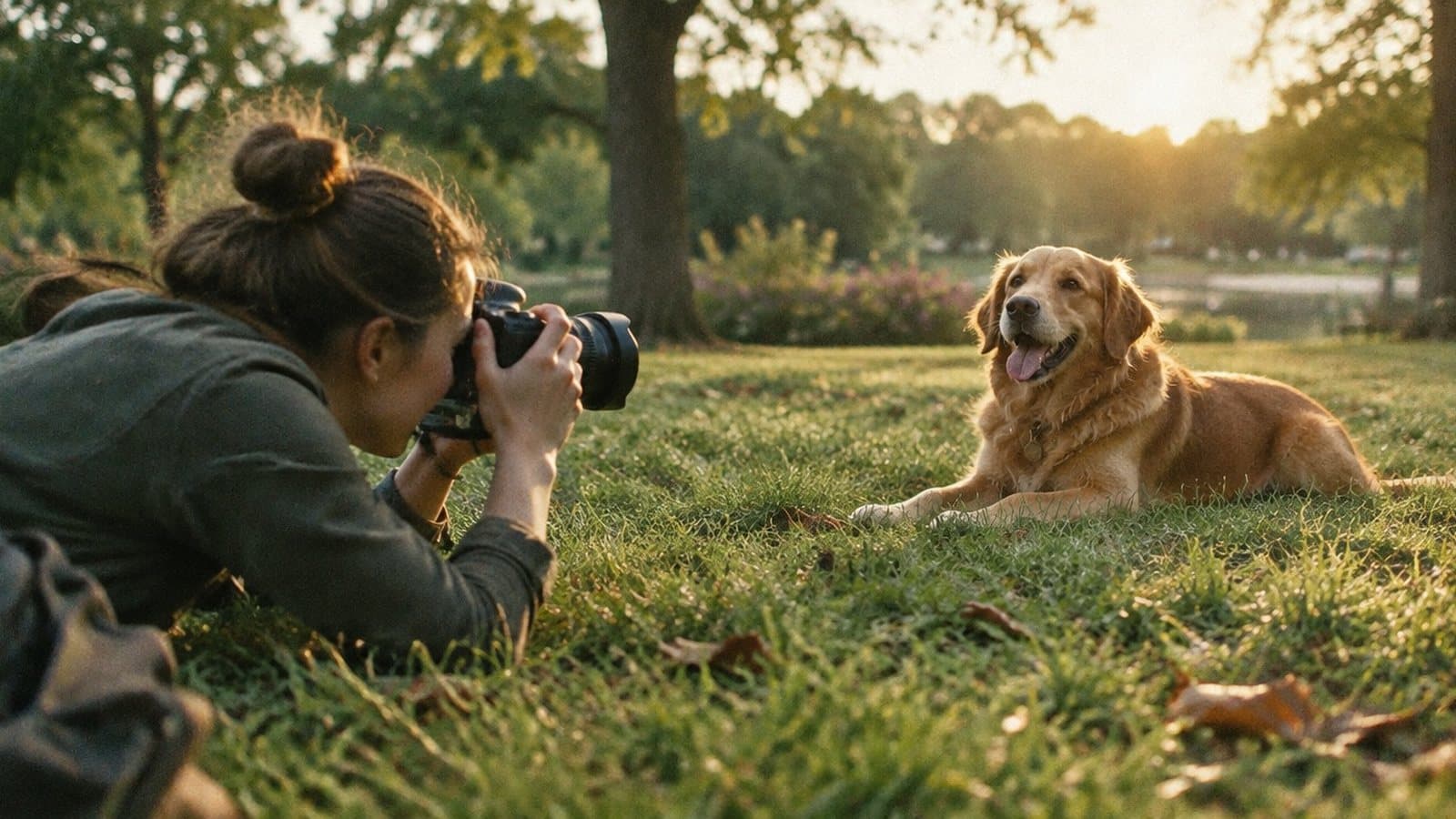
A strategic bio-link for pet photographers combines visual portfolio, direct booking capability, and Mini Shop for prints — allowing emotionally motivated clients to go from Instagram scroll to deposit payment within 60 seconds. In this guide, you'll walk through the complete setup: from swipe-friendly gallery to seamless checkout and QR codes at your local grooming salon. Jump to the 5-step checklist for immediate implementation.
⚡ From portfolio to payment in one link. Jump to the 5-step checklist, or try LinkDash for free.
Key terms for pet photographers with a bio-link
- Bio-link (link-in-bio)
- In one sentence: A mobile-optimised landing page that bundles all your key destinations — portfolio, booking, shop — behind that single clickable URL in your Instagram or TikTok profile.
- Mini Shop
- In one sentence: An integrated selling feature within your bio-page where clients can directly purchase products (prints, digital packages, gift cards) without being redirected to an external webshop.
- Payment integration
- In one sentence: The connection to trusted payment methods like Stripe, PayPal, or local options like iDEAL (Netherlands) and Bancontact (Belgium) that let clients pay instantly through their preferred method.
- Social proof
- In one sentence: Visible evidence of client satisfaction (reviews, testimonials, before/after photos) that convinces hesitant visitors to book.
- QR code distribution
- In one sentence: The strategic placement of scannable codes at physical locations (business cards, posters at veterinary clinics) that direct people straight to your bio-link.
Why do pet photographers need a specialised bio-link?
Short answer: Pet owners decide emotionally and quickly — a generic link page with five random links loses them. A purpose-built bio-page with visual portfolio, direct booking, and shop converts that emotion into revenue.
The pet photography market differs fundamentally from other photography genres. Your clients aren't businesses rationally comparing quotes — they're people who just got a puppy, want to immortalise their senior dog, or Christmas is approaching and they want "that beautiful photo this year". That emotional urgency evaporates if they have to click through three menus first.
Moreover, the customer journey in pet photography is often impulsive. Someone sees your Reel of a Golden Retriever in autumn colours, thinks "I want this too", clicks on your profile, and... that's where the magic needs to happen. You literally have 8 seconds before they scroll on to the next funny cat video.
According to a 2024 survey by the Professional Photographers of America (PPA), pet photography represents one of the fastest-growing specialty niches, with UK and US markets seeing 23% year-over-year growth. The emotional connection people have with their animals creates a willingness to invest that rivals wedding photography.
An effective bio-link for pet photographers does three things simultaneously:
- Visually convince — portfolio immediately visible, no "click here for examples"
- Eliminate friction — booking and payment in the same flow, no redirect to external sites
- Build trust — reviews and before/after transformations visible within the same experience
How do you build a swipe-friendly portfolio gallery on your bio-page?
Short answer: Choose 8-12 of your best works, vary animal types and settings, and ensure each photo loads within 3 seconds on mobile. Vertical or square formats perform better than horizontal.
The gallery on your bio-link isn't a complete portfolio site — it's a highlight reel. You select your most impactful work that instantly evokes emotion. Think of that photo of the Border Collie mid-jump in sunset light, or the serene portrait of a 14-year-old Labrador with a grey muzzle.
Selection criteria for your bio-link gallery
- Emotional impact first: Choose photos that immediately elicit an "aww" or "wow"
- Diversity in animal types: Not just dogs — cats, rabbits, horses show your versatility
- Variation in settings: Studio, outdoor, at home — show what's possible
- Technical perfection: Sharp eyes, beautiful lighting, no distracting backgrounds
Technical optimisation for mobile
More than 87% of social media traffic comes from mobile devices. Your gallery must therefore:
- Compress images to under 200KB without visible quality loss
- Use WebP format where possible (better compression than JPEG)
- Implement lazy loading so photos only load when they come into view
- Have touch-friendly swipe navigation — no tiny arrows
How do you set up effective booking with seasonal offers?
Short answer: Integrate a booking module directly into your bio-link with pre-defined packages (puppy shoot, Christmas cards, memorial session) and use seasonal urgency to stimulate quick decisions.
The booking section of your bio-link is where interest converts to appointment. Here you need to think strategically about how you present packages and which psychological triggers you deploy.
Packages for pet photographers
| Package | Ideal season | Price range | Urgency trigger |
|---|---|---|---|
| Puppy shoot | Year-round (peak March-May) | £129-£219 / $149-$249 | "Puppies grow fast — capture this stage" |
| Christmas card session | October-November | £89-£159 / $99-$179 | "Only 12 spots left for Christmas" |
| Memorial/Senior | Year-round | £179-£299 / $199-$349 | "Honour who deserves to be honoured" |
| Outdoor adventure | April-October | £159-£259 / $179-$299 | "Autumn colours for 3 more weeks" |
| Studio classic | Year-round | £109-£199 / $129-$229 | "Timeless portraits" |
| Family + pet | Year-round | £219-£349 / $249-$399 | "The complete picture" |
Seasonal offers that convert
Seasonal promotions work excellently in pet photography because they create natural deadlines:
- September-October: "Autumn session with golden leaves — book by 15 October"
- November: "Christmas card marathon — 5 sessions per day, when they're gone, they're gone"
- January: "New Year's resolution discount — 15% off all packages until 31 January"
- Spring: "Puppy season — special rate for pups under 6 months"
The key is combining scarcity and urgency without being shouty. "3 spots left this month" works better than "LAST CHANCE!!! BOOK NOW!!!"
How do you sell prints and digital packages via your Mini Shop?
Short answer: Offer three product categories (digital downloads, physical prints, premium items like canvases/photo books) with clear prices and direct checkout via Stripe, PayPal, or local payment methods.
A Mini Shop integrated into your bio-link opens a passive income stream. Existing clients buy extra prints, new visitors purchase gift cards, and seasonal products sell themselves.
Product categories for pet photographers
Digital packages
- Basic digital (5 photos): £69-£109 / $79-$129
- Extended digital (15 photos): £159-£219 / $179-$249
- Full gallery (30+ photos): £269-£349 / $299-$399
- Social media bundle (10 optimised versions): £39-£69 / $49-$79
Physical prints
- Single print 8×12": £30-£50 / $35-$55
- Print 16×24" with mount: £79-£109 / $89-$129
- Canvas 20×28": £129-£179 / $149-$199
- Acrylic glass 24×36": £179-£269 / $199-$299
Premium products
- Photo book 20 pages: £109-£159 / $129-$179
- Photo book 40 pages: £179-£249 / $199-$279
- Wall collage (3 prints): £179-£269 / $199-$299
- Memorial box (prints + USB + cards): £219-£299 / $249-$349
Gift cards as a conversion tool
Gift cards are an underrated revenue source for pet photographers. They're perfect as gifts for:
- People who just got a puppy or kitten
- Birthdays of pet enthusiasts
- Christmas gifts for "the person who already has everything"
Offer gift cards in fixed amounts (£50, £100, £150, £200 / $50, $100, $150, $200) and as a "full session" variant. The latter converts better because the giver knows the receiving family gets a complete experience.
Why is seamless payment integration essential for deposits?
Short answer: Clients trust familiar payment methods. A deposit via their preferred option (Stripe, PayPal, Apple Pay, or local methods like iDEAL in the Netherlands) dramatically lowers the barrier compared to unfamiliar checkout processes — you can see conversion increases of up to 40% with localised payment options.
In the UK, card payments and Apple Pay dominate, while PayPal remains popular for online transactions. In the US, similar patterns hold, with Venmo gaining ground among younger demographics. For European clients, offering local methods like iDEAL (Netherlands, responsible for over 70% of Dutch online payments) or Bancontact (Belgium) can be crucial.
Clients don't want to enter unfamiliar payment details, create new accounts, or navigate clunky checkout flows. The payment should be completed within 30 seconds through their trusted app.
Structuring deposits
The deposit serves two purposes: commitment from the client and cash flow for you. Common structures:
- Fixed amount: £50/$50 deposit regardless of package
- Percentage: 30-50% of the total amount
- Tiered: £50/$50 for packages under £200/$200, £100/$100 for packages above
The deposit should be low enough not to form a barrier, but high enough to discourage no-shows. For pet photography, 30-40% of the package price works well.
How do you use social proof effectively on your bio-link?
Short answer: Place 3-5 featured reviews with the pet owner's name and photo of the pet, show before/after transformations (messy snapshot → professional portrait), and regularly update with fresh testimonials.
Social proof is crucial in pet photography because your clients are emotionally investing. They're trusting you with their "baby" and want to be certain you're good with animals and deliver beautiful photos.
Effective review elements
- Name of owner and pet: "Sarah & her Golden Retriever Max"
- Specific details: "Max was nervous but relaxed within 10 minutes"
- Result focus: "The photo now hangs above our sofa, every visitor asks about it"
- Thumbnail of the photo: Visual proof next to the text
Before/after transformations
A powerful persuasion technique is showing "amateur photo" next to "professional session". This directly visualises the value you deliver:
- Blurry smartphone photo → sharp studio portrait
- Cluttered background → clean, professional setting
- Unflattering angle → perfectly posed with catchlight in the eyes
Ask clients permission to use their "before" photos. Most are happy to agree when you explain it helps others see the value.
How do you use QR codes at veterinary clinics and grooming salons?
Short answer: Create a visually attractive QR code with your logo, place it on business cards and A5 flyers, and leave copies at veterinary practices, grooming salons, dog training schools, and pet shops — all places where your ideal clients visit.
QR codes are the bridge between offline presence and online conversion. In the waiting room of the vet sits your ideal client: someone who cares enough about their pet to visit the doctor regularly, and probably has budget for luxury expenses.
Locations for QR code placement
| Location | Format | Approach | Conversion potential |
|---|---|---|---|
| Veterinary waiting room | A5 poster + business cards | Ask the vet, offer commission | High |
| Grooming salon | Business cards at counter | Mutual referral arrangement | Very high |
| Dog training school | Flyer in info pack | Raffle a free puppy shoot | High |
| Pet shop | Poster near premium food | Commission per booking | Medium |
| Pet boarding | Flyer at reception | Discount for guests | Medium |
| Dog-friendly café/pub | Table tent | Free, fits the vibe | Low-medium |
QR code design tips
- Add your logo in the centre of the QR code
- Use your brand colour as an accent colour
- Test the code on at least 3 different phones
- Add a short call-to-action: "Scan for portfolio & booking"
5-step checklist: launching your pet photography bio-link
- Select 8-12 portfolio highlights — emotion first, diversity in animal types and settings, optimised for mobile (under 200KB per image)
- Configure booking with 3-4 packages — clear names, visible prices, active seasonal offer, deposit via Stripe/PayPal/local methods
- Stock your Mini Shop with products — digital packages, prints in 3 sizes, at least one premium item (canvas or photo book), gift cards
- Add 3-5 reviews with photos — owner and pet name, specific details, result focus, before/after if possible
- Generate QR code and distribute — business cards at grooming salon and vet, A5 poster in waiting room, track which location converts best
⚡ Ready to grow your pet photography business?
LinkDash combines portfolio gallery, booking system, and Mini Shop in one mobile-optimised bio-link. With Stripe, PayPal, and European payment methods built in, you accept payments from clients anywhere.
Try LinkDash for free → no credit card · 5 minute setup
Edge cases and special situations
What if I mainly do location shoots and don't have a studio?
No problem — your portfolio and booking can be entirely focused on outdoor and on-location work. Show diversity in locations (woodland, beach, city park, client's home) instead of studio setups. This can even be a USP: "Your pet photographed at their favourite spot."
How do I handle different prices for dogs vs. cats vs. horses?
Create separate packages per animal type if prices differ significantly. Equine photography often requires different locations and more time, so higher prices are justified. In your bio-link you can use category buttons: "Dogs & cats", "Horses", "Small pets".
What if clients want to call before booking?
Add a "Call me back" option alongside direct booking. Some clients — especially for memorial shoots for ill or senior animals — want to discuss their situation first. A callback form with a brief question ("How can I help you?") works well.
Should I publicly display my prices on the bio-link?
Yes, in most cases. Price transparency filters tyre-kickers and attracts serious clients. The exception is if you do fully custom work (e.g., commercial pet photography for brands) where prices vary per project.
How often should I update my bio-link portfolio?
At least quarterly, ideally monthly. Your Instagram shows your latest work, so your bio-link portfolio needs to keep pace. Seasonal updates make sense: autumn photos in October, Christmas shots in December, spring shoots in April.
Disclaimer: The prices and conversion figures mentioned are indicative and vary by region, experience, and specialisation. Test what works for your specific market and adjust your strategy based on your own data.
Sources and further reading
- Instagram Help Centre — Official guidelines for link-in-bio usage
- Professional Photographers of America — Industry research and benchmarks
- Stripe Documentation — Payment integration for creators
- Instagram Business — Business tools and analytics
- GOV.UK Self-Employment — UK sole trader registration
Frequently asked questions
What is a bio-link for pet photographers?
A bio-link for pet photographers is a mobile-optimised landing page that combines portfolio, booking system, and Mini Shop behind the single clickable URL in your Instagram or TikTok profile. It's specifically designed to quickly convert emotionally motivated pet owners into bookings and purchases.
What is a Mini Shop in a bio-link?
A Mini Shop is an integrated selling feature within your bio-page where clients can directly purchase products like prints, digital packages, canvases, photo books, and gift cards without an external webshop. This eliminates friction and keeps clients within your own environment.
What is payment integration and why is it important?
Payment integration is the connection to trusted payment systems like Stripe, PayPal, or local options (iDEAL in the Netherlands, Bancontact in Belgium) that let clients pay directly through their preferred method. It's important because clients trust familiar payment methods — no unfamiliar forms to fill out, no extra accounts needed, and payment completes within 30 seconds.
What is social proof and how do you use it as a pet photographer?
Social proof is visible evidence of client satisfaction such as reviews, testimonials, and before/after photos. As a pet photographer, you use this by displaying 3-5 featured reviews with owner and pet name, specific details about the experience, and visual proof (thumbnail of the photo taken) next to each testimonial.
How many photos should I put in my bio-link portfolio?
Select 8-12 of your best works for your bio-link portfolio. This isn't a complete portfolio site but a highlight reel. Choose photos with high emotional impact, vary animal types and settings, and ensure each image is optimised for mobile (under 200KB).
Which booking packages work best for pet photographers?
The most effective packages are: Puppy shoot (£129-£219/$149-$249), Christmas card session (£89-£159/$99-$179), Memorial/Senior shoot (£179-£299/$199-$349), Outdoor adventure (£159-£259/$179-$299), Studio classic (£109-£199/$129-$229), and Family + pet (£219-£349/$249-$399). Combine with seasonal offers for urgency.
Where is the best place to put QR codes for my pet photography business?
The best locations for QR codes are: veterinary waiting rooms (A5 poster + business cards), grooming salons (business cards at counter), dog training schools (flyer in info pack), pet shops (poster near premium food), and pet boarding facilities (flyer at reception). Always ask permission and consider offering commission.
Should I display prices on my pet photography bio-link?
Yes, in most cases. Price transparency filters non-serious visitors and attracts clients who already know what they want to spend. The exception is fully custom work like commercial pet photography where prices vary per project.
How do I structure deposits for pet photography sessions?
Common structures are: fixed amount (£50/$50 regardless of package), percentage (30-50% of total), or tiered (£50/$50 for packages under £200/$200, £100/$100 above). The deposit should be low enough not to form a barrier but high enough to discourage no-shows. For pet photography, 30-40% works well.
How often should I update my bio-link portfolio?
Update your bio-link portfolio at least quarterly, ideally monthly. Your Instagram shows your latest work, so your bio-link needs to keep pace. Seasonal updates make sense: autumn photos in October, Christmas shots in December, spring shoots in April.
Can I use a bio-link if I only do outdoor photography?
Absolutely. Your portfolio and booking can be entirely focused on outdoor and on-location work. Show diversity in locations (woodland, beach, city park, client's home) instead of studio setups. "Your pet photographed at their favourite spot" can even be a strong USP.
Which products sell best in a Mini Shop for pet photographers?
Bestsellers are: digital packages (5-15 photos), single prints in 8×12" and 16×24" sizes, 20×28" canvases, photo books, and gift cards. Gift cards are an underrated revenue source — perfect as gifts for people who just got a puppy or for Christmas presents.
Next step: Start your free LinkDash account and build your pet photography bio-link today. Also check out our guide on link-in-bio strategies for photographers for more tips specific to visual creators.