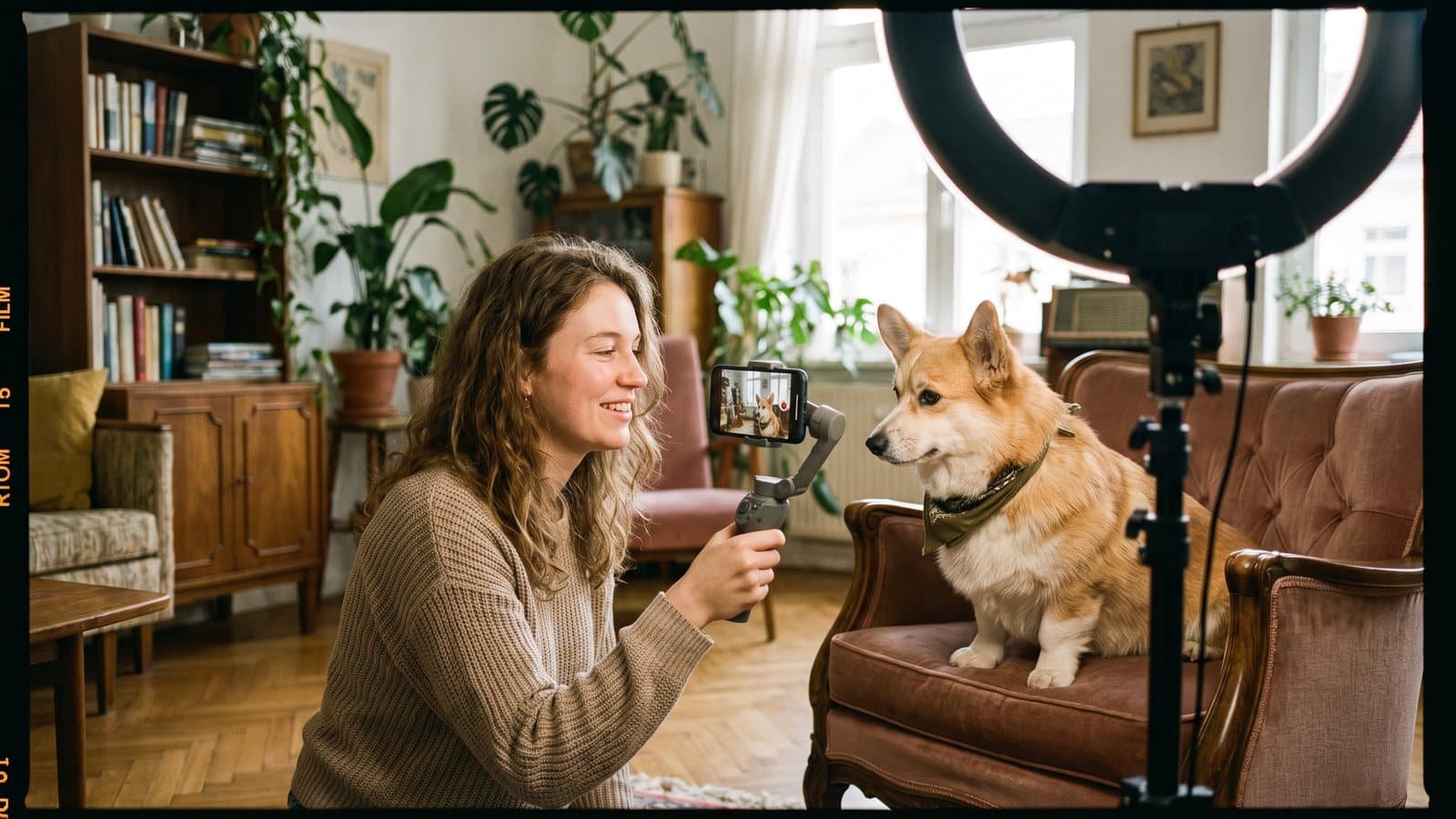
An optimised bio link is the difference between a fun hobby account and a profitable pet business. With the right structure, you bundle sponsorship deals, affiliate products, merchandise and donations in one place — exactly what brands and followers are looking for. Jump to the 5-step checklist for the complete setup.
⚡ Earn more from your pet content. Jump to the 5-step checklist, or try LinkDash free.
Definitions: petfluencer terms you need to know
- Petfluencer
- In one sentence: A content creator whose pet is the primary 'star' of the account, with an audience that follows specifically for the animal.
- Media kit
- In one sentence: A professional document or page with statistics, demographics and collaboration options that you send to brands.
- Affiliate marketing
- In one sentence: Earning commission by recommending products via trackable links — for petfluencers usually pet food, toys or grooming products.
- UGC (User Generated Content)
- In one sentence: Content you create for brands to use on their channels, often for a fixed fee per video or photo.
- Tip jar
- In one sentence: A digital tip pot where followers can voluntarily donate — for petfluencers often framed as a 'treats fund' or shelter donations.
- CPM (Cost Per Mille)
- In one sentence: What a brand pays per 1,000 views or impressions — important for pricing your sponsored content.
Why do petfluencers need an optimised bio link?
Short answer: Because pet accounts have multiple revenue streams that all need to be accessible from one link — and because brands want to see within 10 seconds whether you're professional.
The pet influencer market is growing explosively. Where five years ago only mega-accounts with millions of followers got sponsorship deals, brands are now actively seeking micro and nano-influencers with engaged communities. The problem? Most petfluencers lack the infrastructure to come across professionally.
A messy bio with loose links to Amazon, a PayPal.me for donations, and a Google Drive with 'media kit' screams amateur. Brands scroll through hundreds of accounts per day — they don't have time to piece puzzles together.
With a structured bio link you present:
- Your media kit accessible with one click for PR managers
- Affiliate products grouped by category (food, toys, grooming)
- Your own merchandise without followers having to navigate to external shops
- Donation options for community members who want to contribute
- Platform-specific content for cross-platform followers
How do you create a media kit page for pet brands?
Short answer: Focus on metrics that interest pet brands: engagement rate, audience demographics (pet owners), and previous collaborations with similar products.
Your media kit is your digital CV for sponsorship deals. For petfluencers, different metrics are relevant than for fashion or lifestyle influencers. Brands want to know:
Essential media kit elements for petfluencers
- Account overview: Your pet's name, breed, age, and 'personality' in 2-3 sentences
- Followers per platform: Instagram, TikTok, YouTube — with growth percentage over the last 90 days
- Engagement rate: Calculate this as (likes + comments) / followers × 100. Pet accounts often score 3-8%, much higher than average
- Audience demographics: Age group, location (important for local pet shops), and percentage of pet owners
- Content examples: 3-5 best performing posts with views/engagement
- Previous collaborations: Logos and brief descriptions of brands you've worked with
- Rates: Optional, but saves time. Give ranges for posts, stories, and UGC
In LinkDash you create a separate page for your media kit that you only share with potential sponsors. This keeps your public bio link clean for followers, whilst brands find everything they need.
Setting rates as a petfluencer
There's no fixed formula, but here's a starting point for UK and US petfluencers:
| Follower count | Instagram Post | Instagram Story | TikTok Video | UGC Package |
|---|---|---|---|---|
| 1,000 - 10,000 | £40 - £120 / $50 - $150 | £20 - £60 / $30 - $80 | £60 - £160 / $75 - $200 | £120 - £250 / $150 - $300 |
| 10,000 - 50,000 | £120 - £400 / $150 - $500 | £60 - £160 / $75 - $200 | £160 - £500 / $200 - $600 | £250 - £500 / $300 - $600 |
| 50,000 - 100,000 | £400 - £1,200 / $500 - $1,500 | £160 - £400 / $200 - $500 | £500 - £1,200 / $600 - $1,500 | £500 - £1,000 / $600 - $1,200 |
| 100,000+ | £1,200+ / $1,500+ | £400+ / $500+ | £1,200+ / $1,500+ | £1,000+ / $1,200+ |
Note: engagement rate weighs heavier than follower count. An account with 15,000 followers and 8% engagement is often more valuable to brands than 100,000 followers with 0.5% engagement.
Which affiliate programmes work for pet influencers?
Short answer: Focus on programmes with recurring commission (pet food subscriptions), high order value (premium products), or broad assortment (large retailers).
Affiliate marketing is often the most consistent income source for petfluencers. Unlike sponsorship deals (which come in irregularly), affiliate links generate passive income as long as your content remains relevant.
Affiliate categories for petfluencers
| Category | Examples | Average commission | Advantages | Disadvantages |
|---|---|---|---|---|
| Pet food (subscription) | Butternut Box, Tails.com, The Farmer's Dog | 10-20% + recurring | Monthly recurring commission | Longer customer decision time |
| Toys & accessories | Pets at Home, Chewy, Amazon | 3-8% | Impulse purchases, broad assortment | Lower order value |
| Grooming products | Furminator, Tropiclean, Isle of Dogs | 5-12% | Recurring purchases | Niche audience |
| Pet insurance | Petplan, ManyPets, Lemonade | £15-£40 / $20-$50 per lead | High fee per conversion | Harder to promote |
| Pet tech | Whistle, Fi collar, Litter-Robot | 8-15% | High order value (£150+ / $200+) | One-time purchase |
| Pet CBD/supplements | Honest Paws, ElleVet, Penelope's Bloom | 15-25% | High margins, recurring | Regulations vary by region |
Organising affiliate links in your bio link
The biggest mistake petfluencers make: dumping all affiliate links into one long list. Followers scroll away before finding what they're looking for.
Better structure:
- Group by category: Create sections for 'Food', 'Toys', 'Grooming'
- Highlight current content: Put products from recent posts at the top
- Use descriptive titles: Not "Link 1" but "The Kong toy from my latest video"
- Add context: Brief description of why you recommend this product
How do you sell merchandise as a petfluencer?
Short answer: Start with print-on-demand products (no inventory risk) and test which designs resonate before investing in your own production.
Merchandise is where the real fans distinguish themselves. Someone who buys a t-shirt with your cat's face is a superfan — and superfans also convert better on all your other offerings.
Merchandise options for petfluencers
- Prints & posters: Professional photos or illustrations of your pet. Low production costs, high margins.
- Calendars: Annually recurring product. Launch in October/November for maximum sales.
- Clothing: T-shirts, hoodies with quotes or your pet's face.
- Stickers: Low price (£2-£4 / $3-$5), high volume potential. Perfect as entry-level merchandise.
- Pet products: Bandanas, toys — your audience by definition has pets.
With LinkDash's Mini Shop feature you integrate merchandise directly into your bio link. Followers can browse and buy without navigating to an external site — which significantly increases conversions.
What is a 'Treats Fund' and how do you set up donations?
Short answer: A tip jar framed around your pet ('help me buy Luna's favourite treats') or a good cause (shelter donations) lowers the barrier for followers to contribute.
Not every petfluencer is comfortable with 'begging for money'. But a tip jar isn't begging — it's giving your community the option to show appreciation for free content.
Effective framing for pet donations
- 'Treats Fund': "Buy a treat for Max" — low threshold, fun
- 'Vet Bills Fund': For accounts that are open about their pet's medical costs
- Shelter donations: "50% of all tips go to [local shelter]" — adds purpose
- Content equipment: "Help me make better videos for you" — direct benefit for followers
Transparency is crucial. If you say donations go to a shelter, provide proof (screenshots of transfers, shout-outs from the shelter).
Instagram vs TikTok: platform strategy for petfluencers
Short answer: TikTok builds reach, Instagram builds relationships. Use TikTok for viral growth and discovery, Instagram for community and conversions.
| Aspect | TikTok | |
|---|---|---|
| Algorithm | Favours existing followers | Favours new viewers |
| Content lifespan | 24-48 hours for Stories, 1-2 weeks for posts | Videos can go viral months later |
| Best format | Reels (15-30 sec), carousel posts | Longer videos (1-3 min) perform increasingly better |
| Monetisation strength | Affiliate links, sponsorship deals | Creator Fund, brand deals |
| Bio link clicks | Higher percentage (followers know you) | Lower percentage but more volume |
| Brand interest | High for lifestyle brands | High for viral potential |
Platform-specific content tips
- Post consistently (4-7x per week Reels/Stories)
- Use carousel posts for educational content ("5 signs your cat is happy")
- Stories for behind-the-scenes and personal connection
- Highlight covers for permanent content categories
TikTok
- Hook in the first 0.5 seconds (movement, sound, text overlay)
- Trending sounds significantly increase reach
- "Day in the life" format works excellently for pets
- Reply to comments with video for extra content + engagement
Analytics: which metrics matter for pet content?
Short answer: Focus on save rate and share rate — these predict which content converts, not just what gets views.
Views are a vanity metric. A video with 1 million views and 0.1% engagement is less valuable than 50,000 views with 5% engagement — both for algorithms and for brands.
Metrics that matter
- Save rate: Percentage of viewers who save your content. High save rate = people want to revisit or share with friends
- Share rate: How often is your content forwarded? Pet content often scores high here ("you have to see this!")
- Profile visits from content: How many people click through to your profile after seeing content
- Link clicks: The ultimate conversion metric — how many people actually click your bio link
- Follower conversion rate: Percentage of profile visitors who follow
Analysing content types
Track which content categories perform best for different goals:
| Content type | Strength | Weakness | Best for |
|---|---|---|---|
| Funny moments | High shares, viral potential | Lower link clicks | Reach & growth |
| Educational (tips) | High saves, authority | Less emotional connection | Affiliate conversions |
| Behind-the-scenes | Strong community binding | Lower reach outside followers | Donations, merchandise |
| Product reviews | Direct purchase intent | Can come across 'salesy' | Affiliate & sponsorship deals |
| Transformation/before-after | Emotional, high engagement | Not always replicable | Viral growth |
| Q&A / Interaction | Community building | Limited new reach | Loyalty, returning visitors |
5-step checklist: optimising your petfluencer bio link
- Create your media kit page — Add statistics, demographics, rates and content examples. Make this page only visible to brands (not in your public bio link).
- Organise affiliate links by category — Create sections for food, toys, grooming. Put products from recent content at the top with context about why you recommend them.
- Set up your Mini Shop — Start with 3-5 products: stickers (low threshold), prints (popular), and one 'hero' product like a calendar or hoodie.
- Activate your tip jar with clear framing — Choose an angle that fits your account: treats fund, vet bills, or shelter donations with transparency about where the money goes.
- Implement analytics tracking — Connect your bio link analytics with your platform insights. Track which content types generate the most link clicks and optimise accordingly.
⚡ Tired of scattered links and missed sponsorship deals?
LinkDash bundles your media kit, affiliate links, merchandise and donations in one professional bio link. With built-in analytics you see exactly which content converts.
Try LinkDash free → no credit card · 5 minute setup
Scenarios by type of petfluencer
The nano-influencer (1,000 - 10,000 followers)
You've just started or are growing slowly but steadily. Focus on building an engaged community over rapid growth. Start with affiliate links for products you actually use — authenticity is your greatest asset. A simple bio link with 5-7 links is enough: your favourite products, a tip jar, and links to your other platforms.
The micro-influencer (10,000 - 50,000 followers)
Brands are starting to discover you. This is the moment to make your media kit professional. Add a section with "Work with me" that links to your media kit. Begin merchandise experiments — test 2-3 products to see what your audience wants. Analyse which content generates the most profile visits and create more of that.
The mid-tier influencer (50,000 - 100,000 followers)
You're a serious business. Negotiate recurring deals with brands (ambassadorships) instead of one-off posts. Your bio link should now have multiple sections: current collaborations, permanent affiliate links, merchandise shop, and donation options. Consider exclusive content for your most loyal followers.
The macro-influencer (100,000+ followers)
You have leverage. Brands come to you, not the other way around. Your media kit should contain case studies of successful campaigns with concrete ROI figures. Consider your own product line (not just print-on-demand) and structural partnerships. Your bio link is now a full landing page with filtered sections for different audiences: followers, brands, press.
The niche specialist (any follower count)
You focus on a specific type of pet (exotic animals, rescue animals, specific breed) or theme (training, nutrition, health). Your audience is smaller but extremely engaged and ready to buy. Seek affiliate programmes that match your niche — commissions are often higher for specialised products. Your media kit should emphasise your expertise, not just your numbers.
Edge cases and common mistakes
"Can I use affiliate links without disclosing this?"
No. The Advertising Standards Authority (ASA) in the UK and the Federal Trade Commission (FTC) in the US require that you clearly disclose commercial partnerships and affiliate links. Use #ad, #spon, or "affiliate link" in your content. Not only is it legally required, it also protects your credibility with followers.
"Should I post the same content on Instagram and TikTok?"
Cross-posting is possible, but native content performs better. Algorithms recognise recycled content (especially with watermarks). If you must choose: create content for TikTok first (growth) and adapt for Instagram (conversion).
"How often should I update my bio link?"
At least weekly. Put products from recent content at the top, remove broken links, and update seasonal content (Christmas merchandise, summer products). A stale bio link is a missed opportunity.
"What if a brand asks for exclusivity?"
Exclusivity costs extra — at least 50-100% on top of your standard rate. And define exclusivity specifically: "no other pet food" is reasonable, "no pet brand at all" is too broad. Get everything in writing before you agree.
"My pet is no longer photogenic enough / has passed away — what now?"
A sensitive but real scenario. Many petfluencers make the transition to educational content, rescue advocacy, or introduce a new pet. Communicate openly with your community — followers appreciate honesty more than perfect content.
Every situation is unique. This guide provides general guidelines — for specific legal or tax questions, consult a professional.
Disclaimer & sources
This article is intended for information purposes and is not legal, tax or financial advice. Rates and commission percentages are indicative and vary by brand, platform and negotiating position. Always check the current terms of affiliate programmes and sponsorship contracts.
Sources:
- ASA CAP Code on Influencer Advertising — asa.org.uk
- FTC Endorsement Guides — ftc.gov
- Instagram Creator Earnings & Monetization — creators.instagram.com
- TikTok Creator Next Program — tiktok.com/creators
- Influencer Marketing Hub Pet Influencer Report — influencermarketinghub.com
Frequently asked questions
What is a petfluencer?
A petfluencer is a content creator whose pet is the primary 'star' of the account, with an audience that follows specifically for the animal. The difference with ordinary pet accounts is the intention to monetise via sponsorship deals, affiliate marketing or merchandise.
What is a media kit for petfluencers?
A media kit is a professional document or page with statistics, demographics and collaboration options that you send to brands. For petfluencers this contains specific information about your pet, engagement rates, and previous pet-related collaborations.
What is affiliate marketing for pet influencers?
Affiliate marketing means earning commission by recommending products via trackable links — for petfluencers usually pet food, toys or grooming products. You receive a percentage of every sale that comes in via your link.
What is a tip jar or treats fund?
A tip jar is a digital tip pot where followers can voluntarily donate — for petfluencers often framed as a 'treats fund' for snacks, or linked to shelter donations for a good cause.
How much does a petfluencer earn per post?
This varies enormously based on follower count and engagement. UK and US petfluencers with 10,000-50,000 followers can charge £120-£400 / $150-$500 per Instagram post, £160-£500 / $200-$600 per TikTok video. Engagement rate often weighs heavier than follower count when determining rates.
Which affiliate programmes are suitable for petfluencers?
Effective options are pet food with subscription models (Butternut Box, Tails.com, The Farmer's Dog) for recurring commission, large retailers (Chewy, Pets at Home, Amazon) for broad assortment, and pet tech products (GPS trackers, automatic feeders) for high order value.
Do I need to disclose affiliate links in my content?
Yes, the Advertising Standards Authority (ASA) in the UK and the Federal Trade Commission (FTC) in the US require that you clearly disclose commercial partnerships and affiliate links. Use #ad, #spon, or "affiliate link" in your content to comply with regulations and maintain your credibility.
What is the difference between Instagram and TikTok for petfluencers?
TikTok's algorithm favours new viewers and is better for viral growth and discovery. Instagram's algorithm favours existing followers and is stronger for community building and conversions to affiliate links or merchandise.
How often should I update my bio link?
At least weekly. Put products from recent content at the top, remove broken links, and update seasonal content. A current bio link converts significantly better than a static page.
Can I sell merchandise without holding stock?
Yes, via print-on-demand services. You upload designs, customers order via your shop, and the service produces and ships without you having to hold inventory. Perfect for testing which products resonate before investing in your own production.
What if a brand asks for exclusivity?
Exclusivity costs extra — at least 50-100% on top of your standard rate. Define exclusivity specifically in the contract: "no other pet food" is reasonable, "no pet brand at all" is often too broad and restricts you too much.
How do I measure which content converts best?
Focus on save rate and share rate — these predict which content converts, not just what gets views. Also track profile visits and link clicks via your bio link analytics to see which content types actually lead to conversions.
Next steps
An optimised bio link transforms your pet account from a fun hobby into a professional business. Start with the basics — media kit, organised affiliate links, simple merchandise — and build out as you grow.
Want to learn more about specific monetisation strategies? Read our guide on affiliate marketing via your bio link or discover how to sell digital products via Mini Shop.