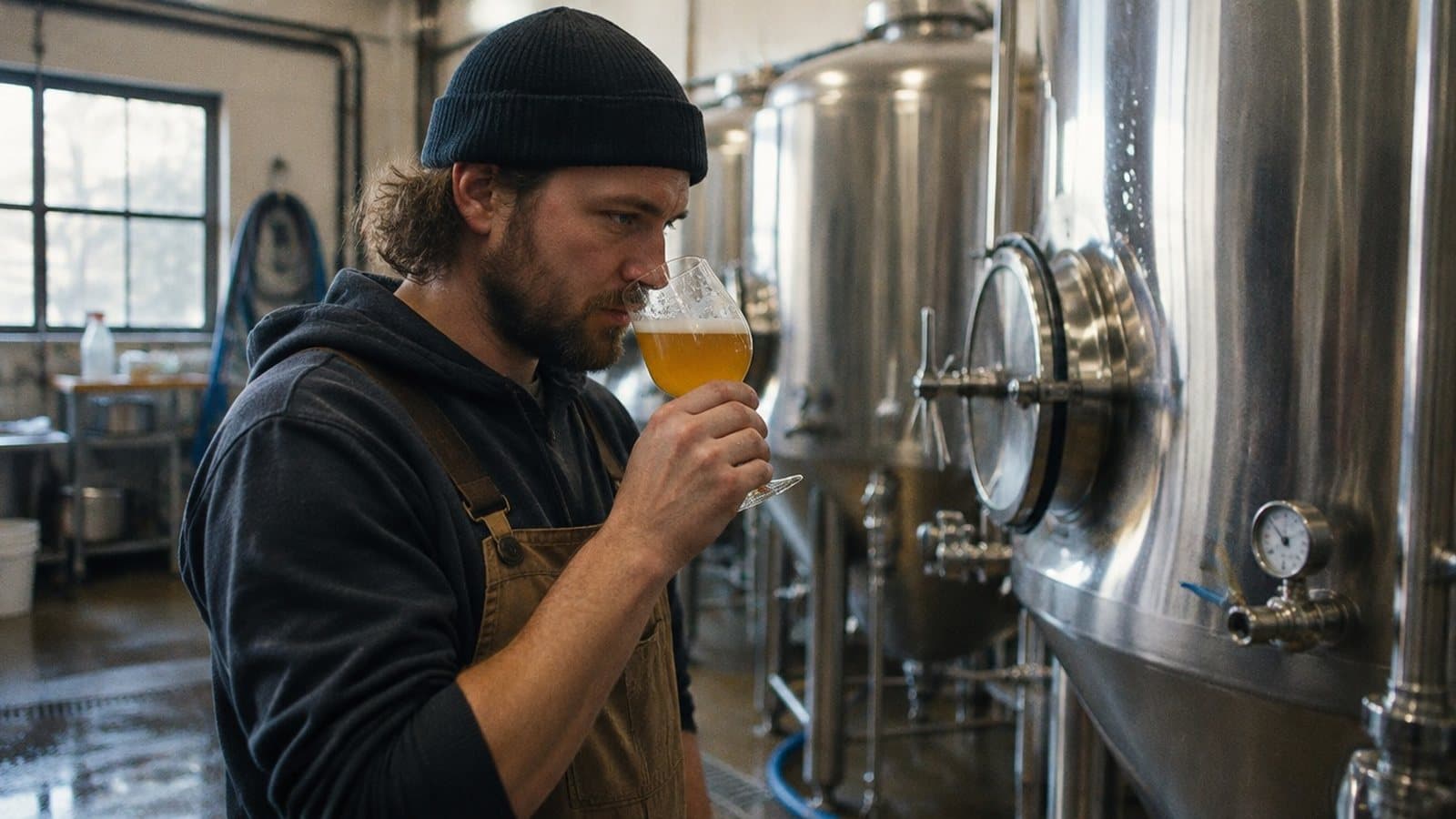
A smart bio page replaces the middleman and brings beer lovers directly to your brewery. With countdown timers for limited releases, integrated tasting bookings, and QR codes on your labels, you build a direct customer relationship that doesn't cost distributor margins. Scroll to the 5-step checklist to start today.
⚡ Sell your batch direct to fans. Jump to the 5-step checklist, or try LinkDash free.
Definitions: bio-link, craft beer, and direct sales
- Bio-link
- In one sentence: A single-link landing page you place in your Instagram, TikTok, or Untappd bio to direct visitors to multiple destinations — tastings, webshop, newsletter.
- Limited release / drop
- In one sentence: A one-time or seasonal batch of beer available in limited quantities, often with countdown and waitlist to leverage scarcity.
- Mini Shop
- In one sentence: A lightweight e-commerce module within your bio page that lets you sell products or tickets without separate webshop software.
- Age verification (age gate)
- In one sentence: A legally required step confirming the visitor is of legal drinking age before accessing alcohol-related content or purchases.
- QR code routing
- In one sentence: A scannable code on labels or cases that links directly to your bio page, turning offline drinkers into online fans.
Why are more breweries choosing direct sales through a bio page?
Short answer: Distributors take 30-40% margin, and you lose control over customer data and brand story. A bio page gives you both back.
The craft beer market in the UK and US continues to grow, but competition for shelf space intensifies. Supermarkets dictate terms; pub purchasing is unpredictable. Small breweries that survive — and thrive — increasingly do so by maintaining a direct line with their fans. A bio page is the cheapest, fastest way to establish that line.
What does it deliver in practice?
- Higher margin per bottle: no distributor cut, no listing fees.
- First-party data: email addresses, purchase history, taste preferences.
- Brand story in your hands: you control the tone of voice, not the retailer.
- Faster feedback: know within hours whether a new batch resonates.
Platforms like Untappd and Ratebeer are valuable for reviews, but they own the relationship. Once someone checks in your beer, that person disappears into their database. A bio page reverses that dynamic: the Untappd link points to your page, where you collect the email address.
How do you set up limited edition drops with countdown timers and waitlists?
Short answer: Create scarcity, build anticipation, and reward loyal fans with early access — all from one bio page.
Step 1: Define your drop strategy
Not every batch needs to be a "limited release." Choose deliberately: a barrel-aged imperial stout that matured for six months deserves the drop format; your standard lager doesn't. Overuse dilutes the urgency.
Step 2: Add a countdown timer
Place a countdown block at the top of your bio page. The timer counts down to the exact moment sales open. Psychological effect: visitors return to check the timer, boosting your page views and feeding Instagram's algorithm (more profile visits = more visibility).
Step 3: Waitlist with email capture
Before the drop goes live, offer an "Early Access" signup. Fans leave their email address in exchange for 15 minutes' head start. This delivers three things:
- You build an email list without ad spend.
- You create a VIP feeling that strengthens loyalty.
- You get a pre-order indication — useful for production planning.
Step 4: Sell via Mini Shop
Once the timer hits zero, the buy button activates. Use a Mini Shop module so the transaction stays on your page. No redirect to external webshops, no distraction, no lost conversions.
Step 5: Post-drop communication
Send a "sold out" email to the waitlist with a teaser for the next batch. That keeps the cycle spinning.
How do you sell tasting and brewery visit tickets through your bio page?
Short answer: Integrate a booking module or Mini Shop with date slots, and prevent no-shows with advance payment.
Tastings are more than a revenue stream; they're a conversion moment. Someone who visits your brewery buys an average of 2-3 bottles to take home and is more likely to sign up for your newsletter. The barrier to booking should therefore be as low as possible.
Option A: Mini Shop with tickets
Create a product called "Tasting — Saturday 2pm." Set inventory to the maximum number of guests. Customer pays upfront, you have certainty. After purchase, your automated email sends practical details: address, parking, what to expect.
Option B: Embed an external booking tool
Already using Calendly, Acuity, or a platform like Bookeo? Link it directly in your bio page block. One click, no friction.
Increase the value per visit
- Upsell at booking: "Add a beer pack to take home (+£24)."
- Email capture: booking = automatic newsletter opt-in (with GDPR checkbox).
- Review trigger: 24 hours after the visit, automated email with Untappd or Google review link.
What do you need to know about age verification for online alcohol sales?
Short answer: An 18+/21+ disclaimer is the bare minimum; consider a soft age gate and always verify at delivery.
In the UK, selling alcohol to under-18s is a criminal offence under the Licensing Act 2003. In the US, state laws vary but typically require purchasers to be 21+. Online, the same laws apply — but enforcement is trickier. As a brewery, you're responsible — not the platform on which you sell.
What's legally required?
UK regulations don't mandate specific technical age verification on websites, but the Portman Group Code of Practice and trading standards expect "reasonable efforts." That means at minimum:
- A clear age statement before purchase.
- Age verification at delivery (ID check by courier).
In the US, the TTB (Alcohol and Tobacco Tax and Trade Bureau) regulations require similar diligence, with state-specific rules varying significantly.
Soft age gate on your bio page
A soft age gate asks visitors to confirm they're of legal drinking age before entering the page. This isn't watertight verification, but it demonstrates good faith and filters accidental clicks. Place the gate only on pages with alcohol sales, not your entire bio page — otherwise you lose traffic from younger visitors who just want to read your story.
Hard verification: Yoti, AgeChecker, and alternatives
For extra certainty, you can use services like Yoti or AgeChecker that verify age through ID scans or database checks. This is more extensive than most small breweries need, but it can prevent reputational damage if you end up in the media.
Disclaimer: this article is not legal advice. Consult the UK Government licensing guidance or a solicitor for your specific situation.
How do you use QR codes on labels and cases to reach offline drinkers online?
Short answer: Print a dynamic QR code on your label that links to your bio page — so every bottle becomes a marketing channel.
Someone drinks your beer at a pub, scans the code, and lands on your bio page. Within 30 seconds, that person can sign up for your newsletter, see your next drop, or book a tasting. Without that QR code, that contact moment would have been lost.
Dynamic vs. static QR codes
A static QR code points to a fixed URL — change the page, and the code stops working. A dynamic QR code (via Bitly, QR Code Generator, or LinkDash integration) points to an intermediary that you can adjust later. Always print dynamic; reprinting labels is expensive.
Where do you place the code?
- Label back: next to ingredients and allergens.
- Neck label: more prominent, but less space for explanation.
- Cases and six-packs: for B2B recipients (pubs) who want to browse your range.
Tracking and attribution
Add UTM parameters to your QR link: ?utm_source=label&utm_medium=qr&utm_campaign=ipa_batch12. That way you see in Google Analytics exactly how much traffic comes from labels — and which batches generate the most scans.
How do you build an email list for new batch notifications?
Short answer: Offer value in exchange for the email address — early access, brewer's notes, or a discount code.
Social media algorithms are unpredictable; email is direct. A newsletter with 500 real fans converts better than 5,000 passive Instagram followers. The question is: how do you get those addresses?
Lead magnets that work for breweries
- Early access: 15 minutes' head start on limited drops.
- Brewer's notes PDF: backstory, recipe (minus trade secrets), pairing tips.
- Welcome discount: 10% off first order.
- Behind-the-scenes video: short brewery tour exclusively for subscribers.
Placement on your bio page
Don't put the email capture at the bottom; nobody gets there. Place a signup block directly under your hero section, and repeat at the bottom as a sticky reminder. Use a clear CTA: "Get batch alerts" is stronger than "Sign up for our newsletter."
Segmentation for advanced users
Ask for taste preference at signup: hoppy, malty, sour, sessionable. Then you can send targeted emails later: only IPA fans get the NEIPA drop, only sour lovers get the kriek lambic.
How do you connect Untappd, Ratebeer, and local beer shops to your bio page?
Short answer: Add recognisable icons and deeplinks so fans are one click away from a check-in, review, or purchase.
Untappd integration
Untappd is the Strava of beer lovers. Link to your brewery profile and to specific beers. Use deeplinks in the format untappd://beer/12345 for app users and fallback web links for desktop.
Ratebeer and BeerAdvocate
These platforms attract a different audience: more serious geeks, often international. Link to your brewery page to collect reviews and increase visibility in search results.
Local beer shops and online retailers
Selling via Beer Hawk, Eebria, or a regional specialist? Add those links as "Buy at [partner]." Why? Not everyone wants to order direct from the brewery; some prefer a trusted shop. By offering that option, you don't lose the sale.
Affiliate and tracking links
Ask your shop partners for an affiliate code. That way you earn commission and measure which channel converts. Combine with UTM parameters for the full picture.
Bio page features for breweries: comparison table
| Feature | Value for brewery | LinkDash | Linktree | Own website |
|---|---|---|---|---|
| Countdown timer for drops | Create urgency, return traffic | ✓ Built-in | ✗ Not available | ✓ With plugin/code |
| Waitlist with email capture | Build pre-launch list | ✓ Built-in | ✓ Limited (Mailchimp integration) | ✓ With form |
| Mini Shop / checkout | Sell directly without redirect | ✓ Built-in | ✓ Commerce add-on (extra cost) | ✓ WooCommerce etc. |
| Age verification gate | Legal compliance | ✓ Soft gate option | ✗ Not available | ✓ With plugin |
| QR code generator | Offline-to-online routing | ✓ Dynamic codes | ✓ Static codes | ✗ External tool needed |
| Untappd/Ratebeer deeplinks | Review collection | ✓ Custom link blocks | ✓ Custom links | ✓ Manual |
| UTM tracking & analytics | Attribution per channel | ✓ Built-in | ✓ Limited (Pro) | ✓ Google Analytics |
| Branded design (custom colours) | Brand recognition | ✓ Fully customisable | ✓ Limited (Pro) | ✓ Full |
Scenarios by brewery type
The homebrewer just starting to sell
You brew in your garage, have 50 Instagram followers, and sell to friends. A bio page gives you instant credibility: professional appearance without a £2,000 website investment. Start with three links: Untappd profile, contact form, and a simple "Order via DM" button. Once volume grows, activate the Mini Shop.
The microbrewery with local pub distribution
You supply ten pubs in the region but want to be less dependent on hospitality purchasing. Use your bio page as a B2C channel: tasting bookings, limited drops, merchandise. Print QR codes on your cases so pub-goers discover you. Goal: 20% direct revenue within a year.
The established craft brewery with national distribution
You're in specialist shops and pubs across the country. Distributors are valuable, but you want first-party data. Use the bio page for exclusive releases that don't go through retail — members-only batches that reward loyalty and protect margin.
The contract brewer without a taproom
You rent brew time at a larger brewery and have no physical location. Your bio page is your brewery online. Invest extra in brand story: photos of the brewing process, videos of you at the kettle, the story behind your recipe. Without a taproom, your page must create the emotional connection.
The brewery with international ambitions
You want to export to Europe, Scandinavia, the US. Create language versions of your bio page and link to local distributors or webshops per country. Use geo-targeting to automatically direct visitors to the right version. Untappd ratings are especially important here: international buyers check reviews before they order.
5-step checklist: your bio page as a brewery
- Set up basics: Choose a bio-link tool with Mini Shop and countdown functionality. Claim your branded URL (e.g. linkdash.app/yourname).
- Structure content: Top: next drop with timer. Middle: tasting booking, Untappd link, webshop partners. Bottom: newsletter signup.
- Activate email capture: Connect Mailchimp, Brevo, or ConvertKit. Test the flow: signup → welcome email → segmentation.
- Generate QR codes: Create dynamic codes for label and case. Add UTM parameters for tracking.
- Analyse and iterate: Check weekly: which links get clicks? Which drop converted best? Optimise based on data.
⚡ Don't fancy cobbling together separate tools?
LinkDash combines countdown timers, Mini Shop, email capture, and QR codes in one bio page — built for creators who sell.
Try LinkDash free → no credit card · 5 minute setup
Edge cases and grey areas
"Can I promote non-alcoholic beer without an age gate?"
Yes, non-alcoholic beer (<0.5% ABV) doesn't fall under the same licensing requirements as alcoholic beverages in most jurisdictions. Age verification isn't legally required. However, a soft disclaimer ("This product contains no alcohol") can prevent confusion if you also sell alcoholic variants.
"I'm not registered as a business — can I sell?"
If you're selling beer regularly, you're running a business and need to register accordingly (Companies House in the UK, or your state's business registration in the US). Occasional sales to friends might fall under hobby sales, but the line is blurry. When in doubt: register — the costs are low and it prevents legal headaches.
"What if my drop sells out in 3 minutes and fans are angry?"
Communicate the available quantity in advance. Offer disappointed fans an automatic waitlist spot for the next batch. Consider a "fairness cap" (max. 2 bottles per customer) to discourage scalpers.
"Can I ship beer by post?"
Yes, but the recipient must be of legal drinking age and identify themselves at delivery. Royal Mail, DPD, and UPS offer age-verification delivery options. Insurance is advisable: glass breaks, claims happen.
"How do I handle negative Untappd reviews?"
Don't respond defensively. Thank the reviewer for feedback, briefly explain if context is missing (e.g. "This batch was experimental and not for everyone"). A single 2-star review among dozens of 4+ is more credible than a perfect 5.0 — nobody believes that anyway.
"Is a bio page enough or do I also need a full website?"
For most small breweries, a bio page suffices in the startup phase. Once your range grows, SEO becomes more important, or you want to serve business customers (pubs, retailers) with spec sheets and price lists, consider adding a website. The bio page then remains your social hub.
Disclaimer: these scenarios are informational, not legal or tax advice. Consult a professional for your specific situation.
Sources and disclaimer
This article is based on public guidelines and best practices. No statistics have been fabricated; where figures are unavailable, we've omitted them.
- UK Government — Alcohol licensing guidance
- Portman Group — Codes of Practice for alcohol marketing
- TTB — Beverage Alcohol Manual (US)
- Untappd for Business
- Ratebeer — About the platform
This article does not constitute legal, tax, or commercial advice. Consult a professional for decisions affecting your business.
Frequently asked questions
What is a bio-link?
A bio-link is a single-link landing page you place in your Instagram, TikTok, or Untappd bio to direct visitors to multiple destinations — tastings, webshop, newsletter.
What is a limited release or drop?
A limited release or drop is a one-time or seasonal batch of beer available in limited quantities, often with countdown and waitlist to leverage scarcity.
What is a Mini Shop?
A Mini Shop is a lightweight e-commerce module within your bio page that lets you sell products or tickets without separate webshop software.
What is age verification or an age gate?
Age verification or an age gate is a legally required step confirming the visitor is of legal drinking age before accessing alcohol-related content or purchases.
What is QR code routing?
QR code routing is a scannable code on labels or cases that links directly to your bio page, turning offline drinkers into online fans.
Is age verification legally required on my bio page?
UK regulations don't mandate specific technical age verification on websites, but the Portman Group Code of Practice and trading standards expect "reasonable efforts" — at minimum a clear age statement and ID check at delivery.
Can I promote non-alcoholic beer without an age gate?
Yes, non-alcoholic beer (<0.5% ABV) doesn't fall under the same licensing requirements as alcoholic beverages. Age verification isn't legally required. However, a soft disclaimer can prevent confusion if you also sell alcoholic variants.
How do I prevent no-shows at tastings?
Advance payment via your Mini Shop is the most effective method. Customer pays at booking, you have certainty. Send a reminder email 24 hours beforehand with practical details.
What's the advantage of dynamic QR codes over static?
A dynamic QR code points to an intermediary that you can adjust later without reprinting the code. Reprinting labels is expensive — always print dynamic.
How do I build an email list if I don't have followers yet?
Offer value in exchange for the email address: early access to drops, brewer's notes PDF, or a welcome discount. Place the signup capture directly under your hero section on your bio page.
Is a bio page enough or do I also need a full website?
For most small breweries, a bio page suffices in the startup phase. Once your range grows, SEO becomes more important, or you want to serve business customers with spec sheets and price lists, consider adding a website. The bio page then remains your social hub.
How do I connect my bio page to Untappd?
Add a recognisable icon block with a deeplink to your Untappd brewery profile. Use deeplinks in the format untappd://beer/12345 for app users and fallback web links for desktop.
Conclusion: from tap to fan in one link
A bio page is no longer a luxury for breweries — it's the shortest route to direct customer relationships, higher margins, and control over your brand story. Whether you're a homebrewer with your first batch or a microbrewery with national distribution: the tools are there, the barrier is low.
Start today. Print your first QR code on a label tomorrow. In a month, you'll have an email list. In a year, you'll wonder how you ever managed without one.
Read also: QR codes to your bio-link: the complete guide and Selling via Mini Shop without your own website.