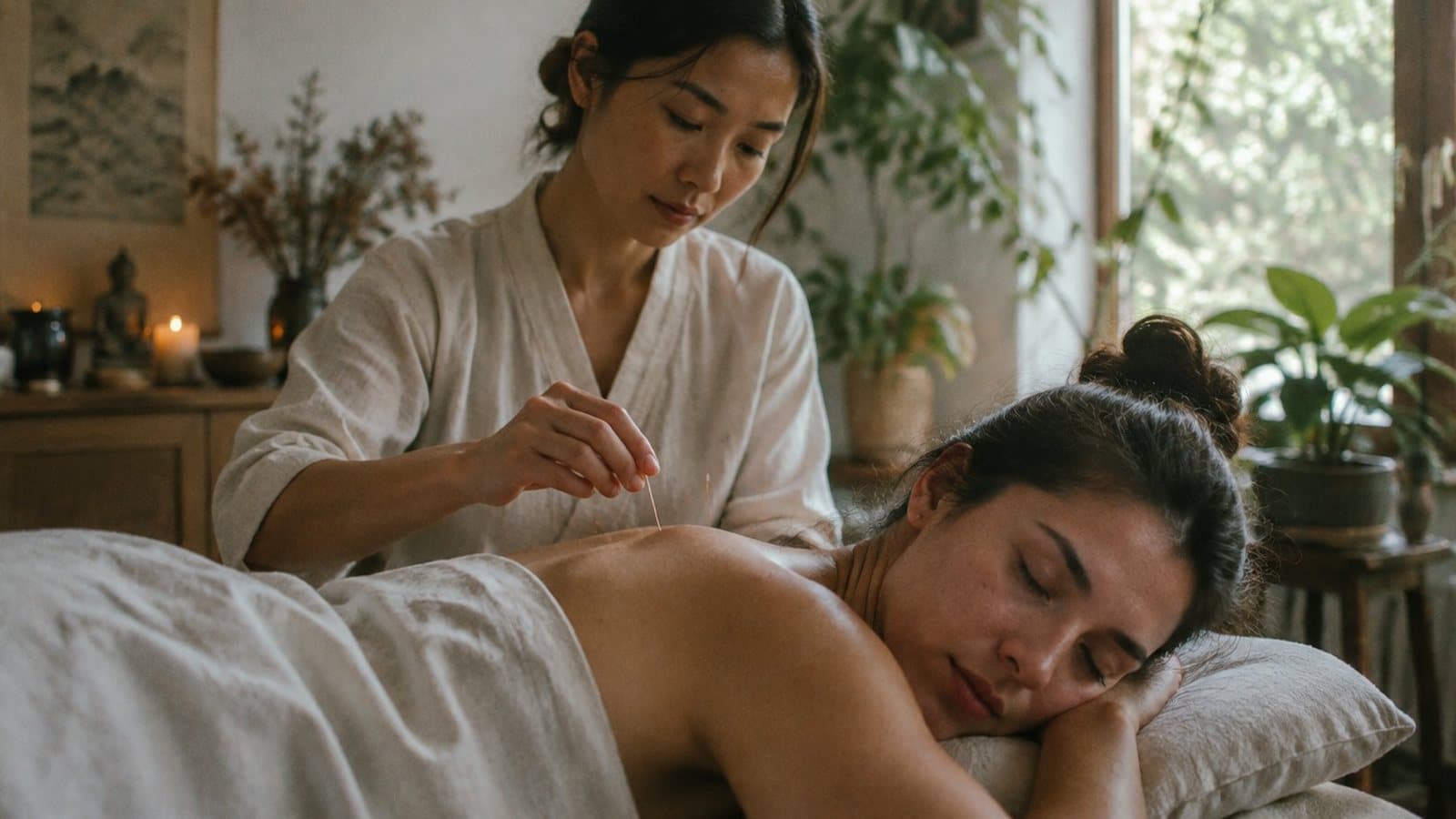
A professional bio-link for your TCM practice combines appointments, intake questionnaires, herbal product sales and certifications on one clear page that builds trust before the first consultation. Read on for the complete approach, or jump straight to the 5-step checklist.
⚡ One link for your entire practice. Jump to the 5-step checklist, or try LinkDash free.
Acupuncturists and TCM practitioners work in a field where trust is everything. Patients share sensitive health information, pay for treatment courses lasting weeks, and often choose based on personal recommendations. Yet that carefully built reputation frequently ends in a messy online presence: an Instagram bio with a single link to an outdated website, WhatsApp messages for appointments, and scattered emails with intake forms.
This article shows how a well-designed bio-page brings all those loose ends together. No marketing speak about "conversion optimisation" — just practical steps for practitioners who want to simplify their admin while projecting professionalism online.
Key terms: what does this all mean?
- Bio-link
- In one sentence: A landing page with all your important links, designed for social media profiles that only allow one clickable URL.
- TCM (Traditional Chinese Medicine)
- In one sentence: A medical system based on balance and energy flow, encompassing acupuncture, herbal medicine, cupping and dietary therapy.
- Intake form
- In one sentence: A questionnaire sent to patients before the first consultation to map medical history, complaints and lifestyle.
- GDPR (UK GDPR / EU GDPR)
- In one sentence: European and UK privacy legislation governing how you may collect, store and process personal data — especially health data.
- Payment link (Stripe / PayPal / bank transfer)
- In one sentence: A direct payment link allowing patients to pay via their preferred method without you handling card details directly.
Why do TCM practitioners need a bio-link?
Short answer: Because your patients arrive via Instagram, TikTok or a Google search and need to book, pay and share information immediately — without visiting three different websites.
The typical patient journey for an acupuncturist looks like this: someone hears about your practice from a friend, searches for you on Instagram, clicks on your profile, and then... it stops. You have one link in your bio, and it goes to your homepage. There, visitors must figure out themselves how to book an appointment, whether there's an intake form, and what your credentials are.
Every extra click costs potential patients. Not because they're lazy, but because they already have enough on their minds. They're seeking help for chronic pain, sleep problems or stress-related complaints. A smooth online experience is the beginning of the care you provide.
A bio-link solves this by bundling everything:
- Direct booking link with available time slots
- Intake questionnaire they can complete beforehand
- Mini-webshop for herbs, supplements or e-books
- Reviews and certifications that build trust
- Payment link for teleconsults or advance payments
How do I set up online appointments with intake forms?
Short answer: Connect your scheduling tool (Calendly, Acuity, or your own system) to your bio-page and add a link to your intake questionnaire below — or build both into one flow.
Most TCM practitioners already use some form of online scheduling. Calendly and Acuity Scheduling are popular, but there are also healthcare-specific solutions like Jane App or Cliniko, or simple alternatives like Google Calendar bookings.
The problem isn't the tool — it's discoverability. If your booking link is buried on page three of your website, or if patients must phone first to discover online booking even exists, you lose people.
Intake form: separate or integrated?
There are two approaches:
Integrated intake: Your scheduling tool automatically sends an intake form after booking. This works well if your tool supports it (Acuity has built-in forms; Calendly can connect with Typeform or Google Forms via Zapier).
Separate link: You place a clear "Complete intake form" button on your bio-page, directly below your booking link. This is more transparent: patients see beforehand what's expected of them.
For TCM practices, I recommend the second option. Intake forms for acupuncture are often extensive — questions about tongue diagnosis, pulse observations the patient can note themselves, sleep patterns, emotional state. By presenting this as a separate step, you prevent people dropping off during the booking process.
How do I set up a mini-webshop for TCM products?
Short answer: Start small with 3-5 products, use a simple payment solution like Shopify Starter or Stripe Payment Links, and integrate the product links directly into your bio-page.
Many acupuncturists sell supplementary products: Chinese herbs, moxa sticks, supplements, e-books on nutrition according to TCM principles. But building a full webshop feels like overkill when you sell perhaps ten to twenty products monthly.
A "mini-shop" on your bio-page is the pragmatic middle ground. You display your best-selling products with image, short description and price. Payment runs via a direct link — no shopping cart, no account creation.
Product categories for TCM practices
| Category | Examples | Price range | Profit margin | Bio-link suitability | Legal considerations |
|---|---|---|---|---|---|
| Herbal tea blends | Sleep tea, digestion blend | £10-22 | 40-60% | Excellent | No medical claims |
| Loose herbs | Goji, astragalus, reishi | £7-30 | 50-70% | Good | Import rules, batch tracking |
| Supplements | Vitamin D, omega-3, probiotics | £12-40 | 30-50% | Good | MHRA guidelines |
| Moxa products | Sticks, boxes, holders | £8-35 | 50-65% | Excellent | Usage instructions required |
| E-books/courses | "TCM nutrition basics" | £15-85 | 90%+ | Excellent | No medical advice |
| Accessories | Acupressure mats, gua sha | £18-70 | 40-55% | Good | CE/UKCA marking if medical |
| Gift cards | Treatment voucher | £45-130 | N/A | Excellent | State validity period |
| Teleconsult bundles | 3x online follow-up | £100-175 | 100% | Excellent | VAT applicable |
Note: strict rules apply to herbs and supplements. You cannot make medical claims ("cures insomnia"), only functional claims approved by regulators. In the UK, the MHRA and Trading Standards oversee these rules; in the EU, EFSA maintains the approved health claims register. This applies to product descriptions on your bio-page too.
How do I display reviews and certifications for credibility?
Short answer: Reserve a section on your bio-page for 2-3 patient quotes, your key qualifications and any professional body memberships — with clickable verification links where possible.
Trust is healthcare's currency. For TCM practitioners, this is especially relevant: you work in a domain some view as "alternative". Certifications and genuine patient reviews bridge that scepticism.
What works on a bio-page?
Patient reviews: Short, specific quotes work better than vague praise. "After 6 sessions I could finally sleep through the night" is stronger than "Amazing therapist!". Request explicit permission before using quotes, and use only first names or initials.
Certifications: Link to your professional body's register page if one exists. The British Acupuncture Council (BAcC), Association of Traditional Chinese Medicine (ATCM) and similar organisations often maintain public registers. A clickable verification link is more convincing than a logo.
Memberships: If you're affiliated with a professional body that sets quality standards, mention this. Many health insurers only cover treatments from registered practitioners — this is relevant information for patients.
What GDPR rules apply to health data on my bio-page?
Short answer: Health data is "special category personal data" under GDPR — you need explicit consent, must have a lawful basis for processing, and are obliged to clearly communicate what you do with the data.
This is where many practitioners go wrong. Your intake form asks about medical history, medication use, mental health. These aren't ordinary personal data like name and email address — they're special categories requiring extra protection.
Minimum requirements for your bio-page
Privacy notice: Link to a concise but complete privacy notice. This must state:
- What data you collect (and why)
- How long you retain it
- Whether you share it with third parties (think about your booking software)
- How patients can access or request deletion of their data
Consent statement: Your intake form must include a clear checkbox where the patient explicitly agrees to processing of their health data. "By completing this form you agree" is insufficient — it must be an active action.
Security: Use only forms that work via HTTPS. Google Forms, Typeform, Jotform — all secure. But never send sensitive data via unencrypted email, and don't store intake forms in a shared Dropbox folder.
Practical disclaimer for your bio-page
Consider a short text below your intake link:
"This form asks about your health. Your data is treated confidentially in accordance with GDPR. Read our privacy notice for details on storage and processing."
How do I set up payment links for teleconsults?
Short answer: Create a payment link via Stripe, PayPal or your bank for your consultation fees and place it prominently on your bio-page with clear pricing.
Teleconsults have been a permanent part of many TCM practices since 2020. Follow-up conversations, herbal prescription adjustments, dietary advice — this can all work online. But payment often runs awkwardly: invoicing afterwards, chasing payments, administrative hassle.
A direct payment link solves this. The patient pays in advance, you receive confirmation, the appointment can proceed. For UK practitioners, Stripe, PayPal and bank payment links are the standard options.
Payment link options
Stripe: Industry standard, excellent Payment Links feature. You can create links without your own webshop. Costs: approximately 1.4% + 20p per UK card transaction.
PayPal: Widely recognised by patients, simple setup. Higher fees (approximately 2.9% + fixed fee) but familiar to most users.
Square: Good for practitioners who also need in-person card payments. Online payment links available.
My advice: create separate payment links for different services. "Teleconsult 45 min — £55" and "Follow-up 20 min — £30" are clearer than a general payment link where the patient must enter the amount themselves.
How do I use a QR code on practice flyers and business cards?
Short answer: Generate a QR code linking to your bio-page, test it on multiple phones, and place it on all your physical materials with a brief instruction.
The offline-to-online bridge is crucial for local practices. Your business card, practice flyer, waiting room poster — all can direct visitors to your bio-page. The QR code is the fastest way.
Best practices
Test thoroughly: Scan your QR code with at least three different phones before printing. Some camera apps struggle with small or complex codes.
Add context: A QR code without explanation gets ignored. "Scan for appointments & info" is enough.
Minimum size: For business cards, at least 2x2 cm. For posters and flyers, larger.
Link to your bio-page, not your homepage: Your bio-page is optimised for mobile and direct action. Your website probably isn't.
5-step checklist: setting up your TCM bio-page
- Choose your priorities: Determine the 4-6 most important actions visitors should be able to take (book, complete intake, buy products, read reviews, etc.)
- Gather your links: Scheduling tool, intake form, webshop or payment links, certification verification, social media
- Build your bio-page: Organise links in logical order — most urgent actions at top
- Add trust elements: 2-3 patient quotes, certification logos or verification links, brief personal introduction
- Generate and test QR codes: Create codes for all your physical materials, test on multiple devices, update your printed items
⚡ Scattered across 5 different tools?
LinkDash bundles your bookings, shop, forms and certifications on one professional page — designed for healthcare providers who want to be taken seriously.
Try LinkDash free → no credit card · 5 minutes setup
Scenarios by TCM practitioner type
Solo acupuncturist with home practice
You work alone, see 15-25 patients weekly, and your "marketing" is mainly word of mouth. Your bio-page needs to be primarily practical: booking link with current availability, intake form, and a brief text about your background. Product sales are secondary — perhaps a few herbal teas for existing patients. Don't forget to add your address and directions.
TCM clinic with multiple practitioners
You offer acupuncture, herbal medicine, tuina massage and dietary therapy. The bio-page must quickly guide visitors to the right practitioner or treatment. Consider a short "Which treatment suits me?" link leading to a decision tree or brief questionnaire. Each practitioner can have their own section with specific booking link. The webshop is more prominent — you probably sell a broader range.
TCM practitioner focused on teleconsults
You see patients across the UK (or Europe) and work largely online. Payment links are crucial — advance payment prevents no-shows. Your bio-page emphasises the online possibilities: video consultation via Zoom/Google Meet, digital intake, herb dispatch by post. E-books or online courses can be a significant revenue stream.
Newly qualified acupuncturist
You're building your practice and don't yet have an extensive review database. Focus on certifications and training — where did you study, how many clinical hours, which professional body are you registered with? Your bio-page is also a portfolio: share articles you've written, talks given, or collaborations with other practitioners. Price transparency helps lower the barrier.
TCM practitioner with a niche (fertility, sports injuries, etc.)
Your specialisation is your unique selling point. Your bio-page must communicate this immediately — not buried in lengthy text, but in the header. "Acupuncture for fertility support" is more specific and attractive to your target audience than "Acupuncture London". Consider a testimonial section specifically focused on your niche, and product links that align with it.
Edge cases: when to include, when to skip?
"Should I put my prices on the bio-page?"
Yes. Price transparency is a trust signal. Patients who baulk at your fees weren't a good match anyway. Patients who find your prices reasonable can book directly without extra questions. Exception: if you use highly variable pricing (e.g. depending on treatment length), refer to a pricing page.
"Can I make medical claims about my herbs?"
No. The MHRA and Trading Standards are strict on this. Functional claims ("contributes to") are permitted if they're on the approved list. Medical claims ("cures", "treats") are prohibited unless your product is registered as a medicine — which is almost never the case for TCM herbs.
"How many reviews should I display?"
Quality over quantity. Two or three specific, credible quotes are more effective than ten generic words of praise. Rotate regularly so returning visitors see fresh content.
"Should I show my face?"
Strongly recommended. TCM is a personal field — patients entrust their health to you. A professional portrait photo (not a holiday snapshot) makes you approachable and real.
"What if my scheduling tool doesn't have a UK-friendly interface?"
Most patients understand basic English booking terms regardless. But if your target audience is older or less digitally confident, consider a tool with clear, simple language and good mobile design like Calendly or Acuity.
Disclaimer: This article provides general information, not legal or medical advice. Consult a specialist for your specific situation, particularly regarding GDPR compliance and product claims.
Sources and further reading
- Information Commissioner's Office (ICO) — Special category data guidance
- MHRA — Rules for claims on medicines and supplements
- British Acupuncture Council (BAcC) — Professional register
- Stripe — Payment Links documentation
- EFSA — Register of approved health claims
Frequently asked questions
What is a bio-link?
A bio-link is a landing page with all your important links, designed for social media profiles that only allow one clickable URL.
What is TCM (Traditional Chinese Medicine)?
TCM is a medical system based on balance and energy flow, encompassing acupuncture, herbal medicine, cupping and dietary therapy.
What is an intake form?
An intake form is a questionnaire sent to patients before the first consultation to map medical history, complaints and lifestyle.
What is special category personal data under GDPR?
Health data is "special category personal data" under GDPR — you need explicit consent, must have a lawful basis for processing, and are obliged to clearly communicate what you do with the data.
Why do TCM practitioners need a bio-link?
Because your patients arrive via Instagram, TikTok or a Google search and need to book, pay and share information immediately — without visiting three different websites.
How do I set up an intake form on my bio-page?
Connect your scheduling tool to your bio-page and add a link to your intake questionnaire below — or build both into one flow with tools like Acuity or Typeform.
What products can I sell via my bio-link?
Herbal teas, loose herbs, supplements, moxa products, e-books, accessories like gua sha stones, gift cards and teleconsult bundles are all suitable.
Can I make medical claims about TCM herbs?
No. The MHRA and Trading Standards are strict on this. Functional claims are permitted if approved; medical claims are prohibited unless the product is registered as a medicine.
How do I display certifications on my bio-page?
Link to your professional body's register page if one exists. The BAcC, ATCM and similar organisations often maintain public registers. A clickable verification link is more convincing than a logo.
What payment methods work best for teleconsults?
Stripe or PayPal payment links are ideal for UK patients. Create separate links for different services with clear pricing.
Should I put my prices on the bio-page?
Yes. Price transparency is a trust signal. Patients who baulk at your fees weren't a good match anyway. Patients who find your prices reasonable can book directly without extra questions.
How large should a QR code be for business cards?
For business cards, at least 2x2 cm. For posters and flyers, larger. Always test on multiple phones before printing.
Getting started with your TCM bio-page
A well-designed bio-link isn't a luxury for TCM practitioners — it's the online translation of the care you bring to your practice. By bundling bookings, intake, products and certifications, you make it easy for patients to take that first step.
Start with the basics: one booking link, one intake form, your key certification. Then build out with product links and reviews as your practice grows. Test regularly that everything still works — a dead link costs trust.
Related articles: